A laboratory report may reach a yard as a single line: a number of eggs per gram of manure. The number looks simple, but the decision requires three different questions.
How much is being shed, does the horse have an illness requiring investigation, and did a previous treatment achieve the expected effect? Combining these questions can turn a useful measurement into false reassurance or an unjustified intervention.
Management does not need to diagnose parasites from a photograph of manure or select a product because another horse seemed better afterward.
Its useful contribution is a reliable information pathway for the veterinarian: sample identity, collection date, laboratory method and the context in which the specimen was taken. Those details make discussion specific and help the team identify what genuinely changed between two reports and what remains unknown.
The American Association of Equine Practitioners revised its guidance in May 2024, linking testing with an individual programme and assessment of anthelmintic effectiveness.
This article concentrates on measurement and decisions, not doses or a treatment calendar. It is distinct from a general prevention plan covering vaccination, dentistry and biosecurity: the question here is how egg-count evidence is read and how the effect of a specific intervention is evaluated.
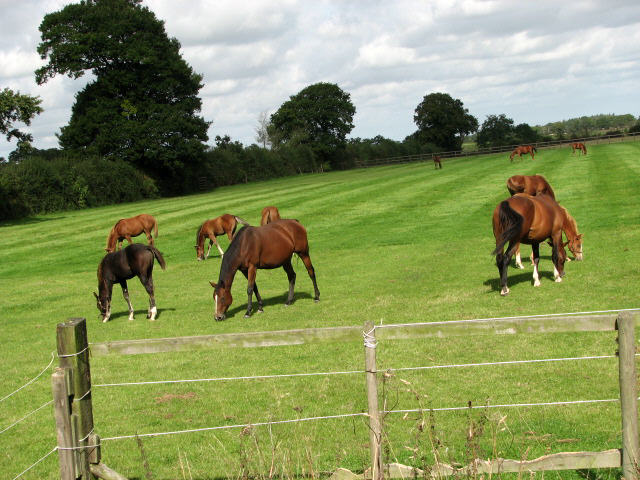
The photographs are archival illustrations of equine surroundings and management, not infected cases or laboratory procedures. The numerical examples are explicitly fictional and test the logic of comparison.
Individual health remains a veterinary matter, especially when pain, diarrhoea or deterioration occurs. A low number does not establish safety, and waiting for a test should not delay seeking appropriate clinical help when it is needed.
1. Define the question before ordering a count
Start by naming the purpose of the submission. Monitoring egg shedding in a stable group of mature horses is not the same question as examining a foal or a horse whose health has changed.
Checking the effect of previous medication also differs from obtaining a baseline picture. The word parasites alone is an incomplete request. Record what the veterinarian wants to learn and what finding could prompt a review rather than an automatic repetition of the existing plan.
An egg count describes what a specimen yielded with a particular method; it is not a census of every worm and developmental stage inside the horse. It should therefore not be used alone to establish or exclude parasitic disease.
A veterinarian may need another examination for a question the routine count cannot answer, including non-egg-producing stages or parasites the method detects poorly. This is a limit of the test, not a failure by the horse or automatically by the laboratory.
A low routine count does not exclude encysted larvae or tapeworm infection; the veterinarian selects the appropriate investigation rather than treating the count as a comprehensive clearance certificate.
Maintain linked but conceptually separate records for health observations and clinical assessment, and for egg-shedding surveillance. Weight loss or altered appetite should not be assigned to parasites merely because a count was performed around the same time.
Ask what each record actually establishes. A clinical change and a high count may coexist without proving causation, while a clinical change alongside a low count may require equally serious attention. The record should preserve this uncertainty rather than hide it.
At the team meeting, replace the broad ambition to get rid of worms with an outcome that can be reviewed. Is the aim to describe the group’s shedding distribution, check follow-up quality or support a veterinary investigation?
Associate each purpose with an expected record, a responsible decision-maker and a review point. This is a proposed management tool, not a form imposed by a veterinary authority, and it does not authorise the person collecting samples to interpret or alter treatment.
Do not compare two horses simply because they live at the same yard. Age, arrival history, pasture exposure and previous interventions may make their relevant questions different.
Define the basis of comparison before examining the numbers, then ask the veterinarian whether the group is sufficiently comparable for the purpose. Keeping each identity and context is more useful than sorting horses into apparently clean and high-shedding lists that readers may mistake for a complete ranking of health or management quality.
2. Sample quality belongs inside the result
Create a stable link between horse, specimen and laboratory request. A name error or swapped containers can produce an otherwise careful decision about the wrong animal.
The team should know who collected the sample, when it was collected, which identifier was used and whether handover became uncertain. Missing identity must not be repaired by guessing the horse that best fits a description. Resolve the record with its owner before the result enters a comparison or influences the plan.
Follow the receiving laboratory’s instructions for container, quantity, storage and transport. Instructions for another assay or another institution should not become a universal rule for every specimen.
Cornell’s diagnostic protocols, for example, make submission details part of the test definition. A yard’s task is to obtain those requirements before collection, rather than leave a specimen waiting and later ask how to preserve validity. Record delays or deviations as they occurred so the professional can judge their consequences.
Record the method name and reporting unit. Eggs per gram is not simply the number seen directly by an examiner, and a multiplication factor alone does not describe a method’s performance.
The University of Kentucky review distinguishes accuracy from precision and stresses training and quality assurance. Two different values do not automatically mean the horse changed; part of the difference may arise from sampling or measurement. The useful response is to examine comparability, not immediately attribute a biological cause.
Consider a management example: a report arrives under an abbreviated name on a day when two horses moved between barns. A legible number is still unsafe to assign if the specimen label does not match the stable identifier.
Keep it outside the comparison series until the identity is documented. This is a pause for data quality, not a declaration that the assay failed, and it is never a reason to copy the result into both records so the day’s paperwork looks complete.
Before changing laboratory provider, agree how the comparison series will be preserved. A change may be justified, but record the new method and the limits of comparing it with earlier results.
Keep original reports rather than transferring numbers alone into a spreadsheet. The veterinarian can then see changes in technique, timing or specimen definition. A good record does not promise that every measurement is comparable; it makes clear when comparison is reasonable and when additional interpretation is required.

3. A reduction test evaluates an effect, not a single-horse verdict
A fecal egg count reduction test differs from a single count because it organises a before-and-after comparison within a defined veterinary design. AAEP guidance supports routine verification of anthelmintic effectiveness rather than assuming it from the product name.
Design, timing, group selection and interpretation are not choices for a spreadsheet alone. The veterinarian and laboratory direct them, while yard staff preserve the records needed to verify execution instead of replacing the agreed design with an improvised comparison.
In the following fictional arithmetic example, the group mean is 500 eggs per gram before the intervention and 50 afterward. A simple descriptive calculation is one minus 50 divided by 500, multiplied by one hundred, giving a 90 percent reduction.
These are teaching values, not real horses, and they classify neither resistance nor the efficacy of a named drug. Professional interpretation requires the test design, data distribution, uncertainty and applicable criteria, not the percentage alone.
A tempting error is to choose the highest pre-intervention value and the lowest afterward because the resulting graph looks more impressive. Changing group identity or silently dropping horses with incomplete samples changes the question.
Preserve raw data and the participant list before calculation, and document every missing specimen and its reason. Missing is not zero, and an inconvenient result is not an exclusion criterion. The professional decides what analysis remains valid from the data actually collected.
If the post-intervention count remains high, begin by reviewing execution and records before issuing a ready-made resistance diagnosis. Were specimens correctly paired, did timing and method follow the design, and was the veterinarian’s intervention documented?
These questions do not deny resistance; they separate possibilities so a recording error is not attributed to a drug, or the reverse. A single unexpected result does not authorise management to repeat or switch medication. Return the evidence to the veterinarian.
Do not compare reductions from groups measured under different definitions and declare one yard superior. Comparative evaluation needs a clear period, group, method and denominator, and the data may not support that ranking at all.
The useful outcome is knowing whether the yard’s own test was validly performed and what professional decision followed. The goal is not a marketing league table made from isolated percentages, but preservation of useful control tools and identification of a process that needs correction.
| Item | Teaching value | Interpretation limit |
|---|---|---|
| Mean before intervention | 500 eggs per gram | One fictional group |
| Mean after intervention | 50 eggs per gram | Design and pairing cannot be inferred from the number |
| Descriptive reduction | (1 − 50 ÷ 500) × 100 = 90% | Not a clinical verdict or a complete resistance test |
4. Replace the automatic calendar with accountable care
AAEP guidance moves away from repeated fixed-interval treatment throughout the year and blind rotation of anthelmintic classes. That does not abolish care or mean every low-shedding horse needs no intervention.
A veterinary programme balances baseline control, targeted decisions, age and environment. Replacing always treat everyone with always wait for everyone is no improvement: both bypass the individual question and turn a measurement tool into an unsafe shortcut for health management. The responsibility is to review, not simply to do less.
Record who recommended an intervention and why, rather than only the package name and date. A new arrival, group change or efficacy result may trigger review, but none automatically becomes a prescription.
When a horse moves between owners or trainers, transfer the documented history instead of an oral recollection that it was treated recently. Recently is not precise enough to interpret a new report against a previous intervention or to recognise an unintended repetition. Good continuity is a practical safeguard, not extra decoration.
Foals and young horses need questions appropriate to their age; adult shedding classifications should not be copied to them without professional review. Veterinary sources describe age-related differences in the importance of particular parasites.
Staff should make age, growth history and group context available to the veterinarian, not infer that a low result validates an adult programme. A striking worm photograph or parasite name should likewise never substitute for a professional assessment of the actual animal and its history.
The idea of parasites not exposed to a drug helps explain why unnecessary use is avoided, but it is not an instruction to leave a sick horse untreated or deliberately create infection. Discuss how the programme controls disease while limiting selection pressure.
The principle does not yield one rule for every farm or season. Reducing the number of interventions must never become more important than the welfare of an individual horse that needs assessment or closer follow-up under veterinary direction.
When reviewing the budget, consider information that changed a documented decision rather than simply counting packages not purchased. The review may reveal a need for better testing, reorganised collection or staff training and may initially increase costs.
Testing alone does not promise financial savings or better athletic performance. The first demonstrable benefit is a clearer reason, finding and action. Actual costs and outcomes can then be evaluated for a defined period and group without selecting only the observations that support a preferred story.

5. Connect laboratory evidence with management context
UC Davis describes acquisition through material contaminated with manure carrying eggs or larvae, depending on the parasite. This brings environmental management into the discussion without allowing a particular paddock to be blamed from a photograph or one horse’s result.
Review pasture access, group changes, feeding locations and existing hygiene with the veterinarian. Decide which observations need records instead of assuming that an orderly-looking scene proves absence of exposure. Appearance is useful context, but it is not a laboratory measure of risk.
An environmental record can begin with a simple map of groups and locations, dated moves and relevant management changes. It does not need every possible detail if nobody knows how it will be used.
When interpreting a surveillance change, ask whether horse identity, location or test method changed at the same time. Multiple changes do not make review worthless, but they prevent attribution to one factor as a proven cause and identify what should be kept consistent during later follow-up.
In a fictional example, a group moves to another barn and changes laboratory in the same month, after which its mean count falls. The new barn cannot be called the proven cause because at least two conditions changed.
Preserve the descriptive improvement with its limits, then define the follow-up question and measurement with the veterinarian. This keeps useful information without turning it into an advertisement for a technology, product or service supposedly solving a problem whose causes were never separated.
A newly arrived horse needs its earlier record matched to current circumstances, not an assumption that a report from another farm describes the new group. Keep report identity, date and source, then let the veterinarian decide how it informs the plan.
Carrying a negative report does not resolve every arrival question, and being new does not establish that the horse introduced contamination. Good arrival management gathers evidence without turning newcomer status into either blame or unsupported reassurance.
Avoid borrowing another country’s climate to create a definitive local calendar. Grazing, housing and weather are not identical, and periods requiring closer surveillance can differ.
Use the source to understand the question, then discuss its application to the horses’ actual environment rather than copying month names literally. Local records describe what happened at the yard; examination and intervention timing remain veterinary decisions. That is more useful than promising a universal rule without knowing the group’s conditions or history.
6. Turn the result into an auditable follow-up
The proposed workflow begins by fixing the question and identity before collection. Next confirm laboratory instructions and document execution deviations. Link the original report to the relevant individual and group records, then obtain the veterinarian’s interpretation and record the decision and reason for follow-up.
These are information-quality steps, not a treatment protocol that can stand alone. A completed form must never replace examination of a horse whose condition changed or who needs urgent attention. The workflow supports care; it does not authorise it independently.
A follow-up table can separate documented finding, interpretation and decision. The finding retains value, unit, method and date; interpretation records the professional’s assessment and its limits; the decision identifies responsibility and the review point. Do not populate unknown fields with automatic conclusions.
A recognised internal gap is better than a manufactured fact. Public reporting should contain only established information relevant to the reader, without unnecessary private identifiers. Separating the layers also makes later corrections possible without pretending the original evidence said something different.
Choose measures that describe process quality: identity-matched samples out of all submissions, or complete follow-up pairs out of those required by the design. State numerator, denominator and period, and do not call the indicator a worm-free rate.
Recording may improve without counts falling, while counts may fall despite poor documentation. Those changes mean different things. Combining them into one reassuring green badge hides information the decision-maker needs and makes a well-presented dashboard less trustworthy than a modest but transparent table.
When a decision changes, preserve the reason instead of erasing the earlier plan. New evidence, corrected identity or an amended test design may explain the change without proving that the earlier team failed.
Distinguish what became known later from what was available at the first decision, rather than use hindsight to condemn a choice made under different information. This discipline helps learning and avoids restarting the same unresolved discussion whenever staff, veterinarian or laboratory changes during a season.
At the end of the cycle, saying the horses were tested is insufficient. Ask whether specimens matched, whether the assay answered its intended question, whether uncertainty was understood and whether the veterinarian’s decision was implemented.
Define a testable next review: were missing pairs completed, methods kept consistent or identity traceability improved? Testing then produces usable knowledge without claiming to guarantee every horse’s health or remove the need for individual care and daily observation. A documented limit is part of the result, not an embarrassment to conceal.
Aletaq Golden AdviceBefore accepting a result, ask whose sample it is, what the method measures and which decision it could change. Keep shedding surveillance, investigation of illness and group-level treatment-efficacy assessment separate.
Closing perspective
The value of an egg count begins with a clear question and an identified sample, not a reassuring number in the care file.
Preserve the distinction between shedding and disease, and between a descriptive comparison and professional evaluation of treatment efficacy. Link every result to method, timing and identity so changes can be understood and their explanation reviewed without guesswork or fragmented recollection.
This approach promises neither a horse free of every parasite nor one programme for every age, climate and yard.
It improves decision boundaries: what is known, what the test did not measure and who has authority to interpret it and direct subsequent care. Clear boundaries make avoidance of unnecessary use part of responsible management, rather than a competition over package counts or a slogan placed ahead of the horse’s welfare.
Before the next submission, which missing detail would make the laboratory report capable of changing a documented decision? Begin with identity, method or timing that needs improvement and discuss the purpose with the veterinarian.
Aletaq’s newsletter offers a considered way to follow new reference material on equine health and breeding. Applying care to an individual animal remains the responsibility of the veterinary team familiar with its condition and circumstances.
Subscribe to Aletaq’s newsletter for new reference guides.Sources and references
- AAEP: Internal Parasite Control Guidelines, revised May 2024
- AAEP: full guidance on testing and treatment-efficacy evaluation
- University of Kentucky: Nielsen on egg-count interpretation and method performance, 2022
- Cornell University: parasitology laboratory protocols and interpretation
- UC Davis: Intestinal Parasites in Horses, 2022