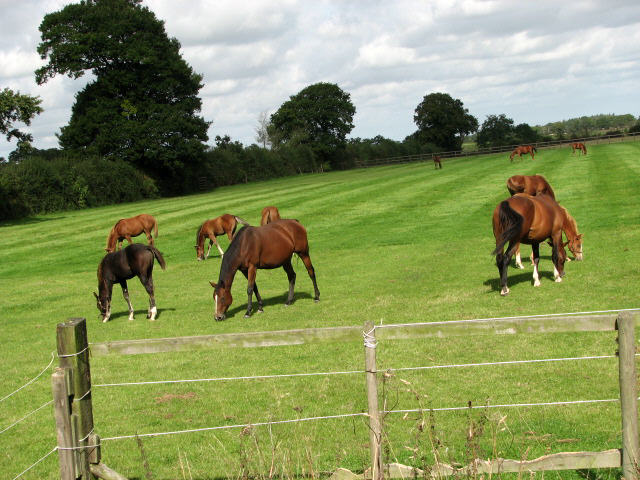
When a yearling out of an older mare appears in a sale catalogue, her age can dominate the buyer’s first impression.
Yet an older dam does not identify the outcome being discussed: a live birth, entry into training, speed after reaching the racecourse, or commercial value at auction. Each question involves a different population, denominator and limit to what the evidence can establish.
Age does not move through a breeding record alone. Sire choice, reproductive history, retention decisions and opportunities for the offspring change alongside it.
One mare may enter breeding after an extended racing career while another has already produced several foals at the same age. A birth year therefore cannot replace birth order, and a change in earnings cannot automatically be assigned to biological decline.
This reference examines peer-reviewed Thoroughbred research in relation to the questions each study actually addressed.
It then offers an original framework for comparison and an explicitly hypothetical calculation, rather than farm data or a prediction about a named horse. Its conclusions should not be transferred to Arabians, endurance or shows without appropriate research.
The aim is to improve the question before judging the horse, while distinguishing evidence, commercial choice and individual veterinary fitness.
1. Age and birth order are different variables
First specify when age is measured. Age at covering is not age at foaling, and a record containing only birth years may not support an exact chronological calculation. A consistent annual definition can be used when that is all the sources provide, provided it is labelled.
Do not combine age at conception with age at birth in the same column and then interpret small differences between groups. This is a measurement problem before it becomes a statistical one.
Next distinguish the order of foals from the order of runners. A mare’s third registered foal does not become her first foal because its siblings never raced.
A season without a foal is not another birth. A verified production list establishes birth order; a runner list records progression into sport.
Gaps between these lists must remain visible as data limitations. Search results containing only successful names cannot reconstruct the missing reproductive history or justify a confident parity label.
Two mares of the same age may differ substantially in breeding duration and previous foal numbers. Ask whether the comparison concerns elapsed years, birth order or time since entering the broodmare band. These measures overlap without being interchangeable.
If a small local dataset cannot separate them, present the individual histories rather than manufacturing a numerical ranking. Reporting a limitation is more informative than giving an unstable estimate the appearance of precision merely because software can produce one.
Define the outcome before choosing an indicator. Conception, live foaling, becoming a runner, winning, speed, earnings and injury are separate endpoints. Horses already racing cannot represent everything that happened before the racecourse.
Conversely, a lower live-foal rate does not establish that a foal which was born and raced must be slower. This is a boundary on inference, not an argument for or against a particular maternal age. A useful report states exactly which stage it observes and which stages remain outside its evidence.
Sale price is a commercial outcome influenced by buyer preferences and market conditions, rather than an independent biological test.
A price discount may describe how buyers value maternal age without demonstrating that the market accurately measured future speed. Keep sales analysis separate from racing outcomes and veterinary assessment.
This allows the reader to distinguish a question about producing a racehorse from one about selling a yearling or sustaining a breeding programme over several seasons, each of which requires a different decision framework.
2. Why studies do not yield one simple answer
Inoue’s 2022 Japanese win-count study attributed the apparent maternal-age pattern largely to sire quality after adjustment, with limited direct age effects among horses that raced.
Sharman and colleagues’ 2022 British turf Flat speed analysis found negative parental-age associations with speed using within-parent comparisons.
Different designs and outcomes require comparison before either conclusion is applied to a purchase.
Ask who is being compared with whom. Comparing different young and old mares may incorporate differences in the mares’ underlying quality.
Following the same mare through time can reduce some stable differences, but does not automatically hold sires, farms, training or calendar conditions constant.
A within-mare comparison improves a question; it is not random allocation and does not eliminate every alternative explanation. This is a methodological reading rule, not a new empirical result being attributed to either paper.
Next examine what performance means. Speed in a race is not career earnings, and neither is the probability of winning at least once.
An adjusted measure may address a more specific question than raw finishing time, but remains dependent on its definition and model. Write down the outcome variable before summarising its direction.
Two measures do not become interchangeable because both are called performance, and raw times from different courses should not be treated as a standardised test of maternal age.
Fawcett and colleagues’ 2021 Japanese reproductive study highlights breeding history and selective retention. Verheyen and colleagues’ 2007 training cohort examined fractures, with findings inconsistent with a blanket claim that older dams always produce more fragile horses.
Live foaling, speed and fractures remain different outcomes; they cannot be combined into an overall age score.
These findings do not supply a universal ideal age or predict that a named horse will lose because of its dam’s birth date. Their practical value is to identify missing variables and prevent unsupported generalisations.
When results differ, explain the outcome and adjustment choices before calling them contradictory. Research can differ in its estimate of an average association while still supporting the practical need to examine a production record in more detail than one age field permits.

3. Selection and sire changes move with age
Keeping a mare in production into later life is not normally a random event. It can reflect knowledge of her progeny, value, veterinary circumstances or the breeder’s commercial programme.
Older mares remaining in the record may therefore differ from those leaving earlier. Good results in the retained group do not, by themselves, show that passing years improved production.
Part of the pattern may reflect which mares the management decision allowed to remain observable. This explanation must be tested rather than assumed to account for every result.
Sire allocation can also change as a mare ages, in either direction. The average outcome for an age group may then incorporate those decisions. Do not reduce sire quality to a covering fee: preserve identity, the available progeny record, the chosen quality measure and the date it was known.
Information emerging after the mating does not necessarily describe what the breeder knew at selection. Mixing those timelines can make an old decision appear more informed than the contemporaneous evidence supports.
Selection continues among offspring. Which stayed on the farm, which were sold, which entered training and which reached a first start? Public race results do not answer every question.
An absent horse must not be assigned an injury or lack of ability without evidence. Unknown reasons remain unknown.
Nevertheless, non-runners matter when the question concerns all foals, while an analysis restricted to runners must state that boundary. Neither population is automatically wrong; each supports a different claim and requires its own denominator.
A completed record also differs from one still developing. Do not compare offspring with several racing seasons against younger cohorts yet to start and then assign the gap to maternal age.
Define a common follow-up window, such as outcomes through a specified racing age where available, or hold incomplete cohorts for later review.
Deferring a judgement preserves information while preventing an unfair time advantage. The same rule applies when a buyer compares full siblings whose opportunities to accumulate results have been very different.
Two questions summarise the risk: what changed alongside maternal age, and what disappeared from view because of sample selection? Record both before fitting a model.
If key variables cannot be documented, offer a limited descriptive comparison rather than a causal explanation. Saying other factors were considered means little unless those factors and measurements are identified.
Data quality precedes presentation quality, however smooth a fitted line looks or how polished a dashboard appears. A transparent small report can be more useful than an elaborate, uncheckable score.
4. Build a record another person can audit
Start with one row per foal, rather than one row per mare listing only her best offspring. Preserve permanent identifiers for foal, dam and sire, birth year, maternal-age definition and verified birth order. Attach a source and verification date to each value.
Resolve names using country and year where necessary before analysis. An identity error can alter birth order or attach one horse’s results to another mare’s production. A clean average cannot repair a mistaken identity hidden inside its input rows.
Separate status from outcome. Is the foal merely registered or has it raced? What are the first and last starts within the observation window?
Which jurisdiction, class, distance and surface describe its racing context? Not every question uses every field, but exclusions need reproducible reasons. Store missing information separately from zero.
Earnings absent from a source are not necessarily zero earnings, and absence from one racing database does not prove the horse never raced anywhere. These distinctions protect both the calculation and the individual horse’s record.
Write the denominator beside every percentage. Winners per runner differs from winners per foal; live foals per mating differs from live foals per mare-season. Select the denominator to match the question and retain raw counts so the calculation is reproducible.
Avoid isolated win percentages and do not drop a small group because it disrupts the story. If a report needs a minimum number of records or adjacent age bands, specify the rule before inspecting the outcome and explain why that rule suits the question.
If earnings are used, define their scope: currency, observation period and jurisdiction. Keep currencies separate. Do not merge prize systems and label the total genetic quality.
A horse can accumulate more money because it had a different programme or more starts, without providing a fair comparison of intrinsic ability. Let each table answer one defined question.
Combining speed, time, sale price and earnings into one score requires an independently justified method; convenience alone does not make such a score scientifically meaningful or commercially fair.
Finally preserve the selection rules and rerun them transparently when records change. A reviewer should know whether a conclusion shifted because a mare added a successful offspring, follow-up matured, or a sire identity was corrected.
Separate these explanations rather than presenting a technical change as biological progress. Traceability also makes correction practical: a discrepancy can be followed to a row, source and definition.
It is much harder to correct a ranking whose construction cannot be reconstructed, however confidently the original chart was presented.
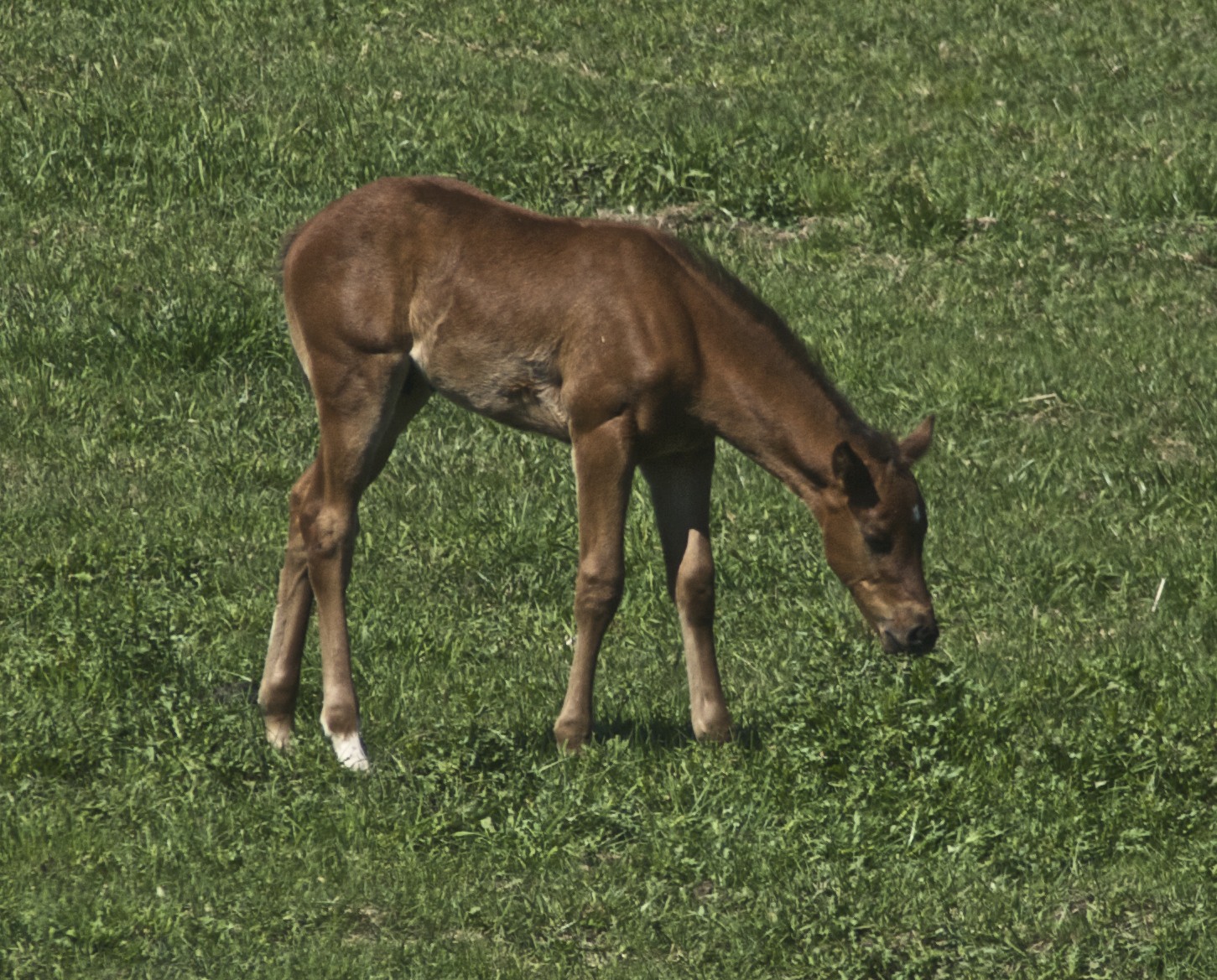
5. A hypothetical example: changing mothers changes the pattern
Consider four invented observations from two hypothetical mares, using an artificial common-scale score. These are neither official ratings nor real horses.
Mare A has an offspring score of ninety when she is eight and eighty-eight when she is twelve. Mare B has a score of seventy when she is four and sixty-eight when she is eight.
The numbers predict neither speed nor a win. They are a small arithmetic construction designed to show how changing group composition can alter the impression obtained from age-group averages.
Grouped only by maternal age, the average is seventy at four, seventy-nine at eight, calculated as ninety plus sixty-eight divided by two, and eighty-eight at twelve.
That sequence rises with age. Within each mare, however, the score falls by two points over four years: ninety to eighty-eight for A and seventy to sixty-eight for B.
The observations have not changed. The comparison has shifted from age groups containing different mothers to each mother’s own trajectory, which addresses a different and more specific descriptive question.
This does not establish a real causal decline or justify estimating an age effect from two points per mare.
In the construction, the mother observed at the oldest age is already the higher-scoring mother, so group composition masks the within-mother pattern. Real records add sires, seasons, opportunities and repeated observations.
Three age-group averages therefore cannot establish a breeding rule, even when their chart looks clean and the direction is visually obvious. The example demonstrates a problem of comparison, not the size or existence of a biological effect.
A practical check follows: report how many distinct mothers contribute to each age band and whether the same mothers appear in neighbouring bands.
Distinguish differences between mothers from changes within a mother over time, while considering other documented variables. If the observations cannot support that separation, do not complete the picture with hidden estimates.
State the sample limits or defer the conclusion. The illustration then improves record design instead of becoming another price table that assigns a yearling’s value from its dam’s age alone.
For a real purchase, request the complete record, partners and foaling sequence before interpreting averages. A buyer may choose how much uncertainty to accept but should not rename that preference a scientific finding.
Ask which new fact would change the decision: a verified sire, mature offspring follow-up or a corrected birth order?
Separating arithmetic, description and choice is the useful lesson. It is more durable than memorising one maternal-age threshold as a ready-made rule for every catalogue, mare and commercial situation.
6. Turn evidence into a reviewable breeding decision
Separate three decisions at a breeding meeting. Veterinary fitness and welfare concern the individual mare. Breeding strategy concerns the mating and programme. Commercial choice concerns retention, sale and budget.
Population evidence can inform the strategy without replacing an examination or making expected revenue a justification for overriding medical considerations.
Participants should know which decision is theirs to make and what information remains necessary. Keeping these responsibilities explicit prevents an attractive pedigree argument from silently becoming a veterinary recommendation that no clinician has actually made.
Write reasons that can be checked later: two offspring need mature follow-up; birth order needs confirmation from the stud book; or sire changes remain insufficiently documented.
These are actionable limitations, unlike an unexplained label that the age is suitable or unsuitable. Specify the review date, required document and responsible person.
An internal follow-up note should not become a public promise of success. Nor should it imply that pedigree removes the need for sound preparation, individual assessment or the ordinary uncertainties of an athletic career.
Assessment of the offspring must remain individual. The dam’s record provides context, not a verdict on a particular yearling’s conformation, soundness or future.
Maternal age alone should not erase documented strengths, while successful siblings should not conceal an individual problem. Present knowns and unknowns together and keep clinical interpretation under professional oversight.
This prevents a discussion of population averages from becoming an unsupported diagnosis of the horse in front of the buyer. It also leaves room to revise a judgement when better evidence becomes available.
Public analysis should distinguish verified findings from interpretation in its wording. State that a study found an association in a defined population, then identify the editorial question it raises, such as reviewing sire allocation or follow-up completeness.
Do not assign a genetic mechanism to an association that did not establish one.
In particular, changing offspring results do not prove a dominant speed gene or its disappearance. Precise language prevents commercial value from resting on an explanation stronger than the evidence offered in support of it.
The final standard is not certainty in every case. It is recognising when the evidence supports a limited description and when further investigation is necessary.
A review may conclude that age alone cannot distinguish two mares on the available record. That is useful if it redirects attention to complete histories, opportunities and examinations.
For the next season, ask a testable question: did the interpretation change after progeny follow-up and mating records matured, or did it remain a market preference? An update then adds knowledge rather than restating the initial opinion.
Aletaq Golden AdviceRequest three separate lines before discussing maternal age: the age definition and measurement date, the true birth order, and the sires and opportunities available to the offspring. If these are conflated, average earnings cannot separate ageing from breeding decisions.
Closing perspective
Do not reduce a broodmare to her years, and do not remove age from the record because some offspring succeeded. Keep it in context: a clear time definition, verified birth order, a specific outcome, documented partners and opportunities, and explicit sample limits.
Individual veterinary judgement and commercial choice remain distinct. Research can expose a missing question without issuing a verdict on every foal before its career begins.
Before the next catalogue, replace a simple age question with a better one: what does the complete record support, and what changes when all foals replace runners as the denominator?
If the calculation can be reproduced and the change explained, the discussion is closer to a responsible decision. Otherwise the next step is another document or verification, rather than a stronger sales claim.
Which missing fact would you request first? Readers wishing to follow further tools for pedigree and production analysis can subscribe to Aletaq’s newsletter for new reference material when available.
Subscribe to Aletaq’s newsletter for new reference guides.