
A review of an Arabian horse entering a show ring sometimes starts with a confident sentence: the horse was calm, the handler rushed, or its gait changed at the gate. Yet that sentence may compress an entire scene into seconds, mixing observation with expectation.
The practical value lies in creating a record another person can review. Owner and handler need to know the precise moment, the limits of visibility, and the question the images can answer before turning an observation into a change in their work.
This guide starts from one defined situation: a walk-in procedure confirmed for the particular show. It does not assume that every show in a season follows the same procedure, and it does not turn the team notebook into a judging sheet or a way to derive penalties from incomplete footage.
The tool proposed here is an editorial method from Aletaq, usable on paper or in a shared file. It separates a visible event, a possible interpretation, and missing information, then connects each question to a small follow-up step that can be carried out and checked.
We move from defining the scene to preserving its sequence, describing movement without diagnosis, handling obstructions, and reviewing differences between observers. Hypothetical cases, unconnected to real horses or shows, illustrate how the notebook leads to a decision proportionate to the evidence, without invented later outcomes.
The aim is to make the next question clearer: do we need a better view, clarification of the procedure, or a focused review with the handler? When the team knows why it needs new information, repeated viewing becomes more purposeful and discussion improves the quality of observation.
1. Confirm the procedure and define the scene
ECAHO initially announced walk-in entry from January 2026. Its clarification published on 9 January then aligned validity with the Blue Book 2026 and allowed schedules approved before its effective date to use 2025 procedures. This notebook therefore begins after the event’s position has been checked.
At the top of the page, record the show, class, horse identity for that appearance, and the reference confirming the applicable procedure. Add the verification date and the person providing clarification, so an answer specific to one show does not migrate into another file as general guidance.
Keep the ECAHO presentation scheme as a reference for understanding the phases, linked to the confirmed event instructions. The scheme distinguishes group and individual presentation and considers flow with different access arrangements. It does not give viewers a scale for inventing arena dimensions or a mandatory entry duration.
Choose one observation unit before viewing: a particular individual entrance or a defined group passage. Do not combine waiting outside the ring from one file with individual presentation from another and describe them as one sequence. Correct horse identity does not establish continuity between clips.
Define the start reproducibly, such as the horse’s first continuous appearance at the gate in the available file. Define the end as the last moment relevant to the entry question. These are analytical boundaries for the notebook, not official definitions of where walk assessment or judging begins.
Write the question in one line before recording an answer: is the gate crossing clearly visible, or can the horse’s response to a visible handler signal be followed? A narrow question prevents the entry notebook from becoming an overall assessment of temperament or the entire presentation.
If the question requires a view of the legs but the video shows only the head, the material cannot answer it, regardless of visual quality. Record this mismatch early. Another view may suffice, or the team may need a different question suited to the evidence it actually has.
Assign responsibility for assembling the material and reading the notes, even if one person performs both roles in a small team. Clear roles establish who edits the description and who checks the source, preventing the latest chat message from automatically becoming the accepted version.
Keep the reference page short and link to the document rather than copying its rules. Aletaq’s earlier article on reading show regulations discusses the regulatory transition in detail. This notebook’s task is to turn a particular entrance into reviewable observations once the applicable procedure is confirmed.
Before starting, agree that a blank is an acceptable result when evidence is absent. Marking a field “not visible” is not an observer’s failure. It preserves the difference between an entrance whose details were unseen and a visible entrance containing a specific event that needs review.
2. Preserve the sequence, not just persuasive clips
Keep the available original file as received, and create a review copy if you need to trim or slow it. A filename alone proves neither authenticity nor filming date. Add where it came from, when it was received, and whether it is a full broadcast or an already published excerpt.
Give each copy a clear name linking event, class, horse, and source, with a marker for each camera angle. Avoid a promotional title such as “best entrance”: it embeds a conclusion before observation and makes the right version harder to find when several clips exist.
First review the clip at its original speed to understand the overall sequence and camera limits. Slow replay may help locate a frame, but changes the viewer’s sense of rhythm. Record the viewing method and do not describe an impression created by slow playback as the horse’s actual speed.
Add a position within the file for each event worth discussing, explicitly labelled as player time. It lets a colleague return to the same point. It does not establish an official phase duration, the event’s clock time, or the absence of cuts before the file was published.
Record visible cuts, camera switches, and sudden zooms before describing what happens around them. If the gate disappears during a cut to the audience, that is a recording gap. Do not fill it from the previous image or assume movement continued unchanged while out of view.
When two angles exist, seek a visible shared event for alignment, such as the handler appearing beside an identifiable barrier. If the match is uncertain, keep the angles separate. Similar steps or sounds alone do not establish that both views record the same instant.
Audio is context requiring separate care: commentary may lag behind the picture or refer to another horse. Write “a sound is audible in the recording” when that is all you can establish. Do not identify its source or call it the cause of a response without linking evidence.
If an observer attended, record that account separately from the video. It may explain camera position or an obstruction, but cannot repair every missing frame. Retain the label “field observation” even when the team trusts the observer’s experience and confidence in their memory.
Keep the written description beside the file name or linked position, not beside a still image alone. A still can show where the observer looked, but cannot display the sequence needed for a movement question. Detached from adjacent moments, it may represent an exceptional frame.
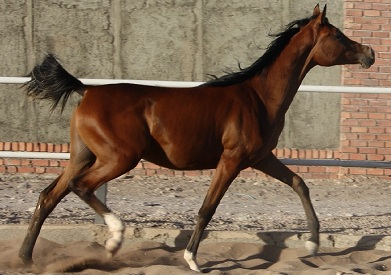
Share only material the team is entitled to use, retaining source attribution where copying is permitted. Internal review does not automatically make a clip available for republication. An illustrative archival photograph likewise supplies no evidence about the particular entrance being analysed.
3. Turn the scene into a testable description
Begin each line with what is visible before stating what it means: the whole horse is in view, the legs are obscured, or the handler changes hand position. This provides a shared point to check. Words such as “cooperative” or “stubborn” require interpretation beyond one scene.
Separate the line into observation, possible interpretation, and follow-up question. An observation might be a change in head direction, an interpretation attention to something outside the frame, and the question a request for a wider view. Repetition in team summaries does not make a possibility a fact.
For a gait question, note which parts were visible and whether visibility was continuous, then state what could be distinguished. A transition may be visible, or the gate view may prevent identification of the gait. “Cannot distinguish” is more accurate than classification based on head movement alone.
Do not infer lead tension from a straight line in the image or slackness from a single frame. Describe the visible lead and hand position when they can be seen. Actual pressure and the sensation in the handler’s hand remain beyond what the recording alone can establish.
Likewise, do not treat ear position or tail height as a standalone indicator of mental state. Changes can be recorded as visible events with context, but labels such as fear, pain, or aggression need another basis. The notebook cannot diagnose behaviour or health from isolated movement.
When reviewing communication, record the observed order: the hand changed position, then the horse changed direction, if both are visible. Sequence does not prove causation, but identifies a passage the handler can explain without opening the conversation with an accusation or a judgment about competence.
Use descriptions anchored to the image, such as the barrier on the viewer’s left, rather than “left” without a reference. Image direction may differ from the horse’s direction, and a circulating copy may be mirrored. Every spatial description needs a reference understandable to someone who was absent.
Replace unsupported numbers with explicit limits: distance cannot be calculated from this angle, or the necessary starting point is not visible. A useful notebook does not require an assumed speed or angle. It requires an honest description that identifies the evidence still needed.
Do not use the published movement score to explain an observation retrospectively. The score may cover a wider phase and criteria or procedures absent from the entrance clip. Keep it in its own record if needed, while this line answers the visible question defined before knowing the result.
After writing, ask a second reader to identify the frame or sequence supporting each main description. If they must guess what you meant, revise the wording. Notebook quality depends on how easily its evidence can be found, not on how many technical terms suggest expertise.
4. Make obstruction and absence part of the result
Obstruction takes different forms: someone crosses the lens, a barrier hides the feet, or a zoom removes the body from frame. Name the form. These situations are not equivalent: horse identity may remain clear while the exact information required for a gait question disappears.
Distinguish “outside the frame,” “in frame but obstructed,” and “unclear because of image quality.” The first may require a wider view, the second a different position, and the third a better file. Precise limits prevent requests for more material that merely repeats the same problem.
Mark the last clear moment before an obstruction and the first clear moment after it, treating the interval as unknown. If the horse returns in a different position, record that difference. Do not invent a route or number of steps connecting two points whose intervening movement is unseen.
Do not equate “I did not see it” with “it did not happen.” A hand signal may be hidden, or instructions inaudible because sound was not recorded. A negative claim requires suitable coverage; otherwise, state that the source cannot establish either occurrence or absence.
If most of the entrance is visible but the actual crossing disappears, split the conclusion rather than making an overall judgment. Describe the visible approach and visible aftermath, leaving the crossing question open. Many clear seconds cannot replace the decisive missing moment for the chosen question.
A second clip may look like confirmation while being an excerpt of the same broadcast with the same obstruction. Check independence before treating it as another observation. Reposting, new commentary, or a different export resolution adds no new angle and does not reveal missing information.
When requesting supplementary material, specify the need without asking anyone to recreate the event: an existing continuous view showing body and gate, if available. If none exists, the original event remains unresolved. Filming a later attempt answers questions about that later attempt only, not the original.
In a hypothetical case, a person in front of the camera hides the horse’s legs on approach, and the whole body reappears beyond the gate. A defensible conclusion describes both visible parts and leaves the crossing gait unclassified. This implies neither a breach nor compliance, and says nothing adverse about the horse.
The decision in that case is to request an existing alternative angle if possible, or improve the filming position next time within venue instructions. A recording gap alone does not justify changing training. The immediate information need concerns observation quality, not confirmation of an existing interpretation.
Retain the obstruction limit in the final summary even when other notes are shortened. Removing it can turn a limited conclusion into a categorical statement that later circulates without the video. The evidence limit must accompany every subsequent use of the observation.

5. Review disagreement without voting on the facts
If an event matters to the team’s decision, ask two observers to write their initial notes independently. Do not show the senior person’s conclusion first, since it may direct the other’s attention toward confirming it. Independence improves the reading; it is not a contest in horse knowledge.
Give both the same file, question, and scene boundaries, recording whether either has an extra angle or attended the event. If available evidence differs, disagreement cannot all be attributed to judgment. Each may be answering a different question or seeing a part unavailable to the other.
Compare event descriptions before debating interpretations. Both may agree that head direction changed and disagree only about why. Record agreement on the visible event and disagreement on explanation, rather than treating the entire review as two incompatible accounts from which nothing can be learned.
For each disagreement, request the exact position and supporting detail: which visible part led to that word? If observers refer to different passages, align the observation unit again. If they refer to the same instant, first examine terminology and image clarity.
“Stopped at the gate” may mean a brief change in forward progress to one observer and a distinct complete halt to another. Replace it with what is visible without inventing a time threshold. The aim is shared language for this record, not a team-created regulatory definition of a halt.
Do not settle an event by counting agreement when everyone has the same incomplete source. Consensus may reflect genuine clarity or the first description circulating through the group. Review value lies in evidence each observer can identify, not in turning similar impressions into an artificial accuracy percentage.
If disagreement remains, retain both descriptions, the shared point, and the source limit, then name the question requiring further evidence. Every session need not end with one interpretation. A professional outcome may be that the available material cannot distinguish between two explanations.
In a hypothetical example, one observer calls the entrance hesitant and another regular, while both agree filming begins after the approach. Reviewing their descriptions shows that one means head direction and the other forward progress. Separate the questions rather than inventing an overall judgment to satisfy both.
After reconciliation, retain the initial note, dated revision, and reason for change. Do not erase the disagreement: it may reveal an unsuitable word or a camera angle that confuses interpretation. The team’s template then improves through actual errors rather than unnecessary additional rules.
If the handler’s explanation is needed, provide the question, position, and limited description, not a conclusion about intention or overall technique. Their account may add useful context, but keep it separate from the video observations. A well-framed question improves decisions without making the notebook a personal trial.
6. Finish with a bounded action and reusable worksheet
End each question with a defined action, an owner, and the information it should produce. This may mean requesting an uninterrupted file, reviewing a signal with the handler, or clarifying procedure with the organiser. “Improve the entrance” alone is too broad to determine what happens after the meeting.
State what could change the decision: a new angle revealing the hidden moment or written instructions specific to the event. This prevents reopening discussion because the same clip is reposted. A useful update adds evidence or changes the question, rather than merely adding a more confident comment.
In a second hypothetical case, body and gate remain continuously visible, and the timing of a visible signal differs between two recorded attempts. The team may review signal timing with the handler in a familiar, safe setting, without declaring that the difference caused a response or competition result.
Record this as an examination of one communication question, not a new training programme for the whole horse. Specify beforehand what will be filmed next. The example establishes no later success and prescribes no mandatory attempt count; it ends with selecting a reviewable action.
If the missing information concerns procedure, contact the organiser before constructing an explanation about the horse. Identify class, phase, and schedule reference, then ask one specific question. The notebook itself creates neither a penalty nor an objection entitlement; those depend on the event’s applicable rules and process.
If viewing raises a concern about the horse’s wellbeing, preserve the visible description without making it a diagnosis and seek suitable professional assessment. Replaying a clip does not replace examination. An aesthetic judgment cannot establish a medical cause or justify concealing a sign requiring attention.
ECAHO cites welfare among the reasons for walk-in entry and presents good horsemanship principles on its show pages. The notebook reflects that general aim through measured language and proportionate action. It does not convert those principles into treatment or automatically apply a ridden-sport manual to a halter show.
Use the following template for one question at a time, repeating rows as needed rather than adding fields unrelated to observation. Someone absent from the review should be able to understand evidence, limit, and decision without hearing the oral story that accompanied the first viewing.
At the next review, reopen the previous question before adding a new observation. Did the requested material arrive, and did it actually answer the question? If the question changes, record why. This keeps successive decisions about different appearances distinct and preserves what the team has learned.
Finally, close the review at a point suited to the practical need, keeping unresolved questions explicit. The decision may be that current evidence does not justify a change. That is a defined outcome when its reason and revision condition are recorded, rather than indefinite postponement of every decision.
| Field | What to record | Limit |
|---|---|---|
| Case reference | Show, class, horse, confirmed procedure | Applies to this appearance |
| Question | One narrow event to investigate | No overall horse assessment |
| Source | File, origin, angle, player position | File time is not official timing |
| Observation | Visible description that can be located | Sequence does not prove causation |
| Gaps and obstruction | What is missing and where clarity ends | Unseen does not mean absent |
| Independent review | Agreement, disagreement, support for each description | Agreement is not a vote on facts |
| Next decision | Action, owner, expected information, revision condition | Action bounded by the evidence |
Aletaq Golden AdviceWrite down the limits of the image before describing the horse: where does the clip begin, what obstructs it, and which moment is missing? If those answers are unknown, improve the observation before increasing confidence in its interpretation.
Closing perspective
One entrance does not need a grand story about the horse; it needs a precise question and a retrievable source. Preserving image continuity and limits separates what appeared from what was interpreted, directing effort toward information the decision actually lacks.
Confirm the event’s applicable procedure, describe the sequence in observable terms, and retain obstruction and disagreement in the summary. Uncertainty need not stop useful work: it identifies the appropriate action, whether a better filming angle, a question for the handler, or clarification from the organiser.
The notebook proves useful when another reader understands the decision and what could change it without sharing the first impression. A proportionate decision respects horse and team by seeking stronger evidence before broadening a claim or turning a passing image into a lasting description of an individual.
Which field will change your next entrance review: visibility limits, independent description, or the condition for changing a decision? Subscribe to Aletaq’s newsletter for practical tools and sourced readings on Arabian horse shows, helping you ask better questions and build a record that becomes more useful through review.
Subscribe to Aletaq’s newsletter for new reference guides.