
Two people can leave the same Arabian show with opposing descriptions of its sound. One found the announcements clear from a grandstand seat; another found the environment loud beside the horses’ entrance. Neither a louder argument nor a photograph of an alert horse resolves that difference. The useful questions are where a measuring device was placed, when its reading was recorded and what the display actually represented. Without that context, a number becomes detached from the scene it is supposed to describe.
ECAHO documents provide a useful starting point: a form covering several locations, welfare principles and a prohibition on excessive stimulation by noise. The reviewed materials do not provide a universal numerical hearing-safety limit for horses. This guide therefore separates a documented provision, an editorial suggestion for organising observations and a decision belonging to the responsible official. Its purpose is to create a record that another person can review, rather than rank horses or condemn a show from a short recording.
The method is intended for owners, breeders and organisers who need a more precise question than whether the music seemed loud. We examine location, moment and device, then test a fictional comparison without named horses or real measurements. Suggested additions to a working record remain suggestions, not new regulations. An individual horse’s health or a suspected injury requires separate veterinary assessment. Neither an acoustic log nor facial expression replaces that assessment, however orderly or persuasive the record may appear.
1. A conduct rule is not a display threshold
The 2025 Blue Book’s conduct rules prohibit excessive stimulation by noise and intimidation throughout the showground and stable areas, at all times. That provision concerns treatment of horses. It does not say that one isolated reading establishes an infringement or determines a particular sanction. Conversely, the absence of a recorded measurement does not protect a practice from observation or investigation where an incident warrants attention. A numerical record and an account of conduct answer related but distinct questions.
A useful working file can maintain two adjacent evidence streams. One describes sound: location, moment, device and the value displayed. The other describes an observed incident in specific terms: who did what, where, when and what can be established. Do not bridge them by assuming that every movement of a horse was caused by music or that a loud environment proves misconduct by a particular person. Linking observations requires more than their appearance at roughly the same time.
The technical guidelines also identify another purpose: announcements should be clearly audible in the grandstands, ring, paddock and stables. Organisation requires information to reach people working with horses; it is not simply a matter of silencing a venue. This requirement does not specify one operating level for every location. Using it to justify unchecked increases in volume, or treating it as a reason to remove announcements altogether, adds something the text does not say and reduces an operational question to an unnecessary binary.
Define the question before using the instrument. Are you describing the collecting-ring entrance during an announcement, comparing two locations within one phase, or documenting an observation reported to an official? A precise question determines what information is needed and prevents every log from becoming a verdict on the whole show. The proper conclusion may be deliberately narrow: this was the reading at this position and moment, rather than a certificate describing conditions throughout an entire day.
A sheet should not be labelled official simply because it resembles an ECAHO form. A team may create a useful internal record, but should distinguish it from a report completed by an authorised official within that person’s duties. This distinction matters because a later reader needs to know who gathered the information, who reviewed it and how it may be used. Clear labelling preserves the practical value of an observation without granting authority that has not been established.
The editorial boundary is straightforward: identify the document and edition when describing a provision, then identify our proposed method separately. Suggestions are not obligations, and this guide does not replace a show’s adopted schedule and instructions. The public ECAHO index reviewed for this article lists the 2025 Blue Book chapters. A competition taking place in a later year does not automatically turn that document into a new edition or establish which provisions an event has adopted.
2. Map the locations before reading the number
The sound-report form deliberately includes several locations: beside two main-arena loudspeakers, the arena’s middle, the collecting ring, the VIP area nearest a loudspeaker and the stabling area. This map prevents a spectator’s experience from standing for everyone else’s location. It does not predict which point will produce the highest or lowest reading. That requires observation rather than an assumption based on a location’s name or an attractive photograph in the catalogue.
As an additional practical suggestion, label each position so that another person can return to it. “Near speaker one” may be insufficient if equipment is rearranged or a colleague interprets the numbering differently. A stable description of a gate, fence or corner, supported by a simple site sketch, can help. This guide specifies no mandatory microphone height or distance: the reviewed materials do not establish those details as an ECAHO requirement or a universal method.
Collecting information should not introduce additional risk to people or horses. Agreeing safe access with the responsible official and keeping clear of movement routes matters more than filling every box quickly. If a position cannot be reached safely, record that limitation rather than substituting a distant reading beneath the original location label. An honestly described missing observation is more useful than an apparently complete file that attributes a measurement to somewhere nobody actually stood.
When comparing locations, distinguish simultaneous observations from sequential ones. The first may have been recorded during an announcement and the second during a break, making a change in programme look like a difference between places. Where observations are sequential, note the order, interval and phase. This does not make the file useless. It changes the question it can answer and prevents a change in time from being hidden beneath the heading of one supposedly uniform site map.
A map also supports a focused request rather than a general verdict. A team can ask for a particular collecting-ring position to be reviewed during a stated phase without claiming that the entire stabling area, or every show, shares its conditions. Such precision helps an owner understand the waiting environment and helps an organiser locate the question. Neither needs to turn a local observation into a league table of festivals or a judgement about the studs taking part.
Finally, separate the instrument’s location from a horse’s location. A reading in the arena’s centre does not establish that every horse spent the same time there, followed the same route or encountered those conditions at that moment. Those are separate questions requiring separate records if relevant. A positional report does not by itself describe each participant’s movement history or explain an individual response. Recognising this limit preserves the measurement’s value rather than asking it to prove something else.
| Form location | Practical observation question | What a sound reading cannot establish alone |
|---|---|---|
| Near the two main-arena loudspeakers | Which speaker and moment? | Conditions at every arena position |
| Middle of the main arena | Which programme phase? | Each horse’s route and time there |
| Collecting ring | Is the position identifiable and repeatable? | An individual horse’s condition or cause of behaviour |
| VIP area nearest a loudspeaker | Did position change between observations? | That spectators’ conditions represent the collecting ring |
| Stabling area | When was it observed and what was recorded? | A whole-day summary or clinical diagnosis |
3. A moment and a maximum are not the whole day
The form asks for the measurement moment, such as class, championship or prizegiving, and for the maximum value measured. ECAHO’s good-horsemanship page describes a project begun in 2018 and directs attention to periods when music or announcements are loudest, mentioning trot presentations and the moments before placings are announced. That historical account must not be presented as a study published this year or as a recent finding from measurements whose underlying data have not been examined.
Selecting a loud moment does not make it representative of the whole show. It answers a specific question about the observed period, not the average day or an individual horse’s exposure duration. Label the result accordingly: the highest reading observed during the described observation. Do not replace that with “the festival’s usual sound level” unless a measurement design and evidence support that different claim. A blank form or two scattered observations cannot supply such a basis.
Two measurement columns preserve two observations, but do not by themselves explain how the observer collected them or the interval between them. Our editorial suggestion is to attach enough context to reconstruct each: programme phase, observation time and whether music, an announcement or another identified activity was present. We prescribe no invented observation duration. If the responsible body has an adopted method, record and reference it rather than creating a replacement beneath the official form’s name.
Do not automatically collapse the observations into one impressive-looking summary merely because arithmetic is possible. Before summarising, establish whether the values represent the same kind of observation, under comparable conditions and for the same question. Keeping them separate is appropriate when that information is absent. Declining an inadequately defined calculation is not analytical failure. It prevents the appearance of numerical precision from creating confidence in observations that do not support the proposed comparison.
A break, a presentation and a prizegiving remain different contexts even at one position. A useful comparison may require the same phase on the following day, rather than selecting a quiet moment after an adjustment and announcing success. State why an observation period was selected before seeing the result, and retain that choice when repeating the observation where possible. This is an editorial method for clearer comparison, not a guarantee that all conditions match or a substitute for specialist technical oversight.
A timetable of observations is not a medical record. If a sound observation coincides with unusual behaviour, describe the behaviour accurately before attempting to explain it. Inform the relevant official, and leave individual clinical questions to the veterinarian. This guide provides no calming prescription or home hearing test, and does not recommend exposing a horse to sound to test its response. A review should reduce unsupported claims, not create an experiment on horses during a competition.
4. The device and the evidence trail
The form names SL-100 and the Decibel X app in separate columns, asking for both when both are available. That describes the form’s structure; it is not our certification that every phone or every app setting produces an equivalent result. Do not populate one device’s column with another device’s reading merely to complete the sheet. Nor should two records be merged simply because both mention decibels. A unit label alone does not establish an identical collection method or interpretive scope.
A team’s working record can be strengthened with proposed additional fields: instrument or phone identity, app version where used, the displayed setting, observer and changes since the previous observation. These details make it possible to ask the right person follow-up questions. They do not establish instrument quality by themselves or replace manufacturer guidance and specialist expertise. If a setting is unknown, retain that uncertainty in the working file rather than attributing a familiar setting to a device that was not checked.
Preserve the observed reading before writing a summary. When transcribing manually, check the device, position and column so that a copying error does not become an alleged difference between areas. A safely obtained, authorised photograph of the display may support traceability of the number, but does not independently prove the position, duration or preceding conditions. Link each supporting item to what it can actually establish. A large attachment folder cannot compensate for an unclear primary record.
A broadcast or published video serves a different purpose. With verified identity and date, it may help establish programme sequence or a visible incident. It is not a guaranteed reproduction of the sound level at the horse or measuring device. Do not extract a number and attribute it to the original arena, or treat a viewer’s playback volume as proof about the source. Reconstructing a technical measurement requires appropriate original material, a suitable method and specialist explanation of its limits.
Placing two devices side by side is also insufficient to declare one accurate and the other unusable. Such a comparison may form part of organised technical work, but it needs conditions and interpretation not supplied by the form’s layout. An organiser can ask a specialist to assess instrument suitability without turning an editorial article into a product review. Our concern is that device identity remains visible and that equipment changes are not concealed when someone explains a change in the record.
A clear record distinguishes corrections from additions. If a reading was entered under stabling instead of the collecting ring, correct its position with an explanation rather than leaving two copies that appear to be independent observations. Give a new observation its own identity linked to time and place. No elaborate system is necessary. A later reviewer should simply be able to see what was recorded initially, what was added and what changed, without rewriting the past to support a preferred conclusion.

5. A fictional case: did the adjustment work?
Consider a fictional team representing no real show or horse. It first observes sound beside the collecting-ring entrance during an individual presentation. An authorised technician then adjusts the announcement system. A second observation is made from a grandstand seat during a break, using another phone. We assign no invented readings because the problem precedes the number: location, moment and instrument all changed. That pair of observations cannot isolate the effect of the adjustment the team wants to assess.
The defensible statement is that two observations were collected in different contexts around a documented action, not that the adjustment reduced sound in the collecting ring. A stronger comparison would return to the original point, with the same device and a comparable programme phase where practical, documenting remaining differences. This is a review method, not an experiment to stimulate horses or a reason to restore sound an official has already reduced. Safe practice and authority take precedence over a tidy comparison.
If the phase cannot be repeated before the day ends, leave the comparative conclusion open rather than completing it by assumption. Record that the action occurred and that its comparative review remains incomplete, then specify what the next observation needs. Implementing an adjustment and establishing its effect are different achievements. This also helps an organiser make defensible claims: an improvement promise should not exceed its evidence. Discussion with owners can then concern a defined record rather than competing impressions or general assurances.
In another version, the team repeats the observation at the original position but during prizegiving rather than an individual presentation. Location now matches, while programme phase does not. Do not erase that difference because the result seems convenient or call the conditions identical without qualification. The observation may still describe prizegiving usefully even if it cannot establish what happened in another phase. Evidence quality is not always an all-or-nothing choice; it includes matching a record to the question it actually answers.
Comparing a horse’s placing before and after an adjustment introduces a larger problem. Scores and placings arise from different judging observations and competition circumstances; a sound log does not establish that it changed them. Do not describe a lower reading as the cause of improved movement or attribute a defeat to music without evidence suitable for that causal question. A breeder can legitimately seek a review of conditions while keeping career, pedigree and result analysis within their separately documented evidence.
The case ends with a testable question for the next review: could the observation be repeated at the described position, phase and device, and what still differed? A clear answer improves the file even without a categorical verdict. If the answer remains unclear, strengthen the observation’s definition instead of enlarging or colouring its number. That is the practical value for owners and organisers: knowing what evidence is needed next and what can be said now, without inventing a conclusion to complete a table.
6. From observation to responsible follow-up
Begin follow-up by clarifying roles. An owner can raise an observation, the organiser manages the venue, an authorised technician reviews the announcement system and officials act within their responsibilities. Possessing a meter does not confer permission to alter event equipment or enter horse areas. The disciplinary-committee rules place welfare supervision and investigation within that committee’s remit. This article does not replace that authority with a verdict reached by a reader from a phone display or personal impression.
To make an observation useful, begin with place, time and a factual description, then attach the relevant measurement if available. Distinguish direct observation from information supplied by others, and original material from a circulating copy. A professional concern does not need an accusation or sensational headline to merit review. Withholding blame before verification is not indifference to welfare. It keeps discussion centred on examinable facts and reduces confusion between personal discomfort and an infringement defined by the adopted rules.
Where an authorised adjustment occurs, describe the action without claiming an effect that has not been reviewed. After repeat observation, state what changed and what remains outside scope. The conclusion may be that the collecting-ring record is clearer, rather than that the venue has acquired a comprehensive safety certificate. A narrow defensible finding is better than a broad declaration that fails when someone asks about stabling or prizegiving. Accurate descriptions of progress protect trust when programmes or personnel later change.
A day’s file can inform the next show without pooling unlike numbers. Review recurring questions: are positions identifiable, does information reach the authorised person and are original observations retained? This evaluates the working process rather than ranking events by their largest displayed value. If instruments or methods differ between festivals, explain the differences before considering comparison. The existence of a published table is not a reason to invent an index that readers cannot reconstruct or whose limitations they cannot understand.
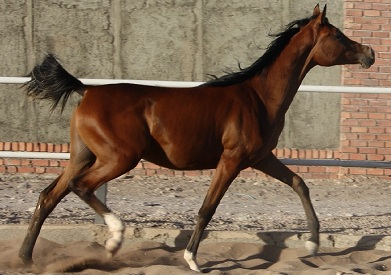
Even genuine photographs need captions that respect their limits. A trotting horse illustrates a presentation phase, but does not establish its sound level, the animal’s emotional state or somebody’s actions outside the frame. An archival image should retain its date and context, never becoming evidence about a current show or the fictional case. Separating illustration from measurement helps readers understand the scene without asking them to believe an unshown reading or a diagnosis unsupported by a single photograph.
The breeder’s useful outcome is not a promise that sound alone explains show quality. It is a better ability to ask an appropriate question before and during participation. Ask how observation is conducted and who is responsible, understand the limits of published data and retain evidence specific to the incident rather than generalising it. If a horse appears injured or needs care, do not wait for an acoustic spreadsheet before requesting veterinary help. Sound records, safe handling and clinical assessment are complementary, separately supported activities.
Aletaq Golden AdviceBefore interpreting a reading, reconstruct its full heading: position, moment, device and what the field recorded. If one changes between observations, show that change before claiming an adjustment worked.
Closing perspective
Thoughtful sound management begins with a simple recognition: a number does not contain its own location, time or collection method. We add that context to make it useful for the question being asked, not to give it authority beyond the documents. The prohibition on excessive stimulation remains an important conduct provision, while sound observation can help describe and review the environment. Neither replaces the other, and a horse’s success or defeat establishes neither. This separation lets an owner seek a clear explanation and an organiser describe a specific, reviewable action without sweeping assurances.
Before the next show, choose one mapped position and specify what is needed to understand two successive observations there. Could an absent colleague reconstruct location, phase, device and remaining uncertainty? That is the first practical test of a useful record; individual health questions still belong to the veterinarian. Which detail would you request first from the organising team? Subscribe to Aletaq’s newsletter for practical guides connecting horse welfare, sound evidence and responsible competition management.
Subscribe to Aletaq’s newsletter for new reference guides.Sources and references
- ECAHO: Sound level report, one-page form; locations, devices, moment and maximum readings.
- ECAHO for good horsemanship: historical sound-measurement project begun in 2018, intended for evaluation in 2019.
- Blue Book 2025: Rules for Conduct of Shows, articles 23 and 33; frightening horses and excessive stimulation by noise.
- Blue Book 2025: Technical Guidelines, printed page 59; audibility of announcements across show areas.
- ECAHO Code of Conduct 2019, pages 1–2; welfare priority and officials’ responsibilities.
- Blue Book 2025: Rules for Disciplinary Committees, articles 3 and 5 and printed page 52; supervision, investigation and evidence.
- ECAHO show-rules index reviewed 27 November 2026; published chapters are labelled 2025.