
A medal photograph and a winner’s name make a show result look straightforward. Its meaning, however, depends on the class, judging method and rules approved for that event. In 2026 this distinction matters particularly because ECAHO announced a walk-in requirement and subsequently clarified its relationship with the transition to the new Blue Book.
The useful opening question is specific: which approved schedule actually governed this show? An announcement date or federation logo on a poster cannot establish the procedures applied to every competitor.
Owners and breeders face practical consequences. Preparing a calm presentation, organising documents, selecting a suitable class and interpreting differences between judges all require identifiable evidence and clear limits on inference. A horse may place well in strong company while its total remains unsuitable for direct comparison with another horse at a different event.
A buyer may admire a mare’s ring presence yet have no evidence about her fertility or consistency as a producer. Documentation therefore belongs inside the decision, alongside observation of the horse, rather than outside it as an administrative afterthought.
The following six sections form a review method for use before entry and after results appear. Regulatory facts are attributed to published ECAHO documents, including an explicit distinction where available downloads are labelled 2025. The proposed worksheets and decision questions are Aletaq editorial analysis, not official scores or newly invented federation instructions.
The aim is to identify what is established, what needs clarification from the organiser and what a medal cannot prove. A concise evidence file should remain useful when buying a horse, considering a mating or planning the following season.
Start with the approved show schedule
ECAHO describes the Blue Book as its show-rule framework and provides separate downloads for conduct, ties, championships and judging. On 9 October 2026, several available links still carried 2025 labels alongside an official notice about transition to the 2026 edition.
Record the document title and edition, then match them to the event schedule selected by the organiser and approved through the appropriate process. Finding a newer document through a search does not establish that it governed an event approved before its effective date.
Create a one-page event record covering full name, venue, dates, show category, age group, sex, scoring system and championship-selection method. Separate a national show from a specific-origin event even when both share a venue and dates. Similar names do not make them one competition.
Record when each piece of information was received because arrangements can change before the event. The sheet is an index to the applicable rules, not a substitute for them, and becomes useful when an early advertisement differs from the final catalogue or committee notice.
Before committing travel expenditure, ask three questions in writing: which edition applies, where is the schedule explaining judging, and has any amendment been issued for this event? A precise enquiry can prevent a much longer disagreement later.
Seek clarification of the process that will apply to everyone, rather than a prediction of your horse’s placing. If a material provision remains unresolved, treat it as an entry risk instead of assuming it matches a previous show. Some details can wait for the catalogue; others must be settled before entries close.
A second reader can review the file from another perspective. The owner considers costs and purpose, the handler checks ring procedure, and the registration contact checks identity and eligibility. This is not an exercise in producing more paperwork; it helps reveal assumptions made by someone accustomed to a particular system.
Keep the question and answer with the source. Do not elevate a verbal interpretation into a universal published rule. When sharing the clarification with your team, name the exact event so that a valid answer for one show does not become incorrect guidance for another.
Walking into the ring: read the transition notice
ECAHO’s initial announcement introduced walking into the arena, referring to the start of 2026 and to welfare and opportunities to observe the walk. A later notice aligned validity with the 2026 Blue Book and allowed organisers whose schedules had been approved before its effective date to follow 2025 procedures.
Read the two notices together. The first announcement alone is not sufficient evidence of an unconditional final rule for every show, while the clarification is not a blanket cancellation of walking into the ring. The event documentation and transition provisions determine application.
Obtain the applicable presentation plan before final preparation. Identify the waiting point, entry route, signal for transition and ringmaster’s instructions. A short video from a different show may reveal only one part of presentation and should not be used to invent a route.
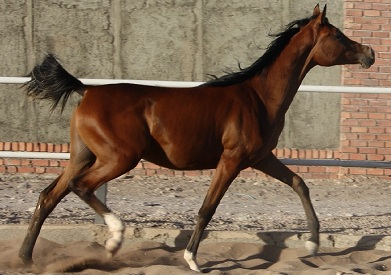
The team should distinguish the horse’s comfortable natural walk from forced slowing or tension that obscures rhythm. Preparation should develop calm, safe responses. This is neither remote diagnosis of movement nor a prescription for one universal training technique.
Practise the route in familiar surroundings, then in a safe space with modest changes in sound or barriers, using short sessions and rest appropriate to the individual. The purpose is to understand the horse’s responses and its communication with the handler, rather than tire it into a manufactured display.
Pain, recurrent stumbling or a clear change in gait shifts priority from aesthetic comparison to veterinary assessment. Medication should not be used to conceal a concerning sign or force a response. Clinical decisions and regulatory compliance require separate attention from the attending veterinarian.
After the show, review execution calmly. Did entry follow the instructions, did the handler understand the signals, and was the waiting area suitable? Record the changes you can make before the next event without attributing every difficulty to the rules.
Conversely, if actual instructions contradicted the schedule supplied to you, retain both accounts and seek clarification through the proper authority. A professional enquiry describes an identifiable event rather than making a general accusation. Calm handling remains useful for daily care, transport and examination even when entry arrangements differ between shows.
A score needs an identifiable calculation method
ECAHO publishes scoring forms with different numbers of criteria and point scales. Its 2025 additional-judging appendix also describes exclusion of highest and lowest marks under conditions that include at least seven judges and specification in the approved schedule.
These examples show why a published total cannot reveal its own calculation method. Identify the form, actual judging panel and aggregation method before interpreting a result. Similar-looking numbers or totals within a comparable range do not justify combining every show into one ranking.
Separate three layers: criterion marks, their sum or averaging method, and the resulting class order. A small difference in one criterion may explain a placing, while the total can conceal strengths and weaknesses that offset each other. A lower mark is not an anatomical diagnosis.
Show judging is evaluation within a presentation system. A prospective buyer still needs independent observation and examination appropriate to intended use. The number may identify a worthwhile question, but cannot answer every question about soundness or the horse’s future.
Consider an explicitly hypothetical arithmetic example: two horses share a total, but one has relatively even marks while the other has wider differences between criteria. This does not establish superior breeding value in the first horse or inferior quality in the second. It demonstrates information lost by reduction to a single number.
Obtain the detailed sheet where available and begin comparisons within the event. If components are unavailable, retain the verified placing and recognise that the total cannot be decomposed, rather than reconstructing supposed marks from commentary, photographs or personal impressions.
For comparisons across seasons, retain age at competition, class, panel, judging system and field size alongside every result. Repeated strong performances under varied circumstances provide broader evidence than one success, but that observation does not authorise inventing an official rating.
A personal indicator should explain its calculation and exclusions. A short transparent record with unresolved questions can be more useful than a seemingly precise ranking built from numbers that do not share a measurement basis or competitive conditions.
The ECAHO record of the 2026 Qatar International Arabian Peninsula Horse Show lets readers inspect separate judges’ columns for type, head and neck, body, legs and movement within a class, alongside the class placing. This changes the first question: rather than asking which headline number looks larger, ask whether the two numbers concern the same class, number of judges and stage of competition.
Read one horse’s row across criteria, then compare how the judges distributed marks in that row. If comparing another horse, begin with the same class sheet; do not pool marks from a different event. This is an editorial method for reading an official sheet, not an added result or a verdict on a particular horse’s breeding value.
This reading identifies the next question; it does not create an alternative placing. If movement marks cluster while conformation marks differ, the useful follow-up concerns the criterion definition and distribution of judges’ assessments, rather than an imagined reason absent from the source.
If an event drops a mark or resolves a tie by a special procedure, consult its rules before recalculating. Keep the sheet link and access date because an initial result may later be corrected. For a purchase or mating decision, obtain pedigree, progeny and professional examination evidence separately; those cannot be inferred from the show-score sheet.
Ties and championships need their own rules
ECAHO provides tie and championship rules separately from general conduct rules. This is a reason to consult the relevant procedure rather than expect the highest class total automatically to win the final. Identify qualification and the championship system chosen in the event schedule.
A final order different from an earlier class order is not automatically contradictory; a separate stage may operate differently. Equally, an unexplained difference should not be justified by imagining a procedure. Seek the actual rule and result that establish how competitors moved between stages.
Label achievements precisely in a horse’s record: a class placing, championship medal or special award. A class win should not become an overall title, and a medal’s proper name should not be replaced with a broader promotional description.
Include event date, venue, class and source, and link the achievement to the horse’s complete identity. Names recur across generations or countries and stud names can look similar. Parentage, birth year and registration details help prevent two horses’ careers from being combined into an appealing but inaccurate narrative.
When a tie appears, preserve the total and order officially announced, then consult the applicable tie-breaking procedure. Do not rewrite the order because a manual addition produces equal numbers; resolution may use a separate rule.
If conflicting sheets exist, compare their dates and whether they are provisional or final, and ask about corrections. A shared photograph of a screen or document is not necessarily an approved result. Limited, accurate evidence with an acknowledged missing explanation is preferable to a confident account that imports another event’s procedure.
Keep evaluation of a result separate from evaluation of people. Disagreement between judges does not itself prove bias, while agreement does not prove perfection. Readers can examine recurring observations and mark distributions without attributing unknown motives.
Alleged breaches and protests belong with the authority and process specified by the event rules. Editorial analysis should describe the available evidence and its limits. The resulting career record remains useful to breeders instead of becoming a dispute that inflates or discounts a horse on the strength of an unverifiable story.

From ring performance to a breeding decision
A show achievement describes an individual’s performance in a particular competition; it is not an inheritance experiment. Evaluating a sire or dam requires another record: offspring numbers, mating partners, ages and opportunities received.
One successful offspring cannot establish the outcome of every mating, and a photograph of selected progeny does not supply the denominator. Ask about known foals, competitors and successful offspring, separating available information from omissions. Sample size affects the confidence warranted by the evidence.
Examine close progeny relevant to your objective rather than distant famous names in a long pedigree. For a mare intended to produce manageable show horses, seek repeated suitable quality in direct offspring or close branches alongside documented health and reproductive history.
Do not substitute endurance or racing speed for that objective: the disciplines assess different outcomes. Nor should a repeated ancestor be called a dominant gene. Pedigree repetition is a calculation; a genetic claim needs different evidence. The tree organises enquiry without supplying an automatic biological answer.
Distinguish evidential strength from market price. A medal may have commercial value at a particular time, but demand does not remove covering, transport, care and registration costs or fertility risks. Build a budget that remains viable if the foal sells below expectation, and decide whether the purpose is early sale, retention or competition.
Record the mating rationale before the foal is born. That prevents rewriting the story after success and helps identify which expectations were supported and which depended chiefly on a stallion’s reputation.
Keep the purchase examination and reproductive record independent of excitement about a result. The veterinarian determines examination scope from intended use, history and circumstances; aesthetic analysis cannot replace it. Where a mare has no progeny, describe anticipated breeding value as a hypothesis rather than an established record.
A purchase can still be reasonable if uncertainty is reflected in price, planning and risk limits. The error is to present probability as a guarantee. A professional decision values the horse’s appearance and achievement while preserving questions that still require evidence.
Build a concise entry or purchase decision file
Begin with identity and purpose, then connect every claim to a document that can be reviewed. A title needs a result, parentage needs registration evidence, and fertility needs a reproductive history or relevant report. Sources are not interchangeable.
An advertisement shows what was promoted; a final result establishes placing. A stud-book record may establish parentage without establishing competitive achievement. Keeping those purposes distinct saves research time and prevents a correct document from being used to answer a question it does not address.
In a hypothetical purchase, a seller presents a mare with a medal, a high score and an attractive photograph but no schedule or progeny record. The buyer first establishes the medal’s meaning, matches identity and obtains the result and judging method. Once the career is verified, examination and reproductive history follow.
Absence of the last document does not mean the mare is poor, but prevents pricing her as though production value were established. Completing the evidence, revising the financial offer or postponing a decision can each be reasonable, depending on purpose.
Use five steps: establish event and edition, match horse and registration, read system and result, separate career from production, and record the decision plus evidence that could change it. Assign responsibility and a review date to unresolved questions, particularly near entry or sale deadlines.
Avoid an unwieldy file; a summary with the essential documents is sufficient. If a later result appears, add it with its date rather than erase the earlier rationale. This lets you learn from information available when the choice was made, rather than judge it entirely through hindsight.
Finally, ask someone who did not attend the show to read the file. Can they distinguish a class placing from a championship medal, understand why scores may not be directly comparable, and see what comes from a source versus your analysis? If so, it is a useful decision tool.
If understanding depends on unwritten names or stories, simplify the narrative and complete the evidence. Value lies in a decision that can be explained, reviewed and shared with breeder, veterinarian, owner and handler, rather than in the number of pages or elegance of promotional language.
| Document | Question it answers | What it cannot prove |
|---|---|---|
| Approved schedule | Which rules govern this show? | A horse’s breeding value |
| Official result | What placing or medal was awarded? | Fertility or inherited quality |
| Stud-book record | Which registered horse and parents? | A competitive title |
| Veterinary assessment | What concerns relate to intended use? | Guaranteed future success |
Aletaq Golden AdviceBefore comparing two horses, compare the documents behind their results: class, judging system and applicable rules. For a breeding decision, begin with direct progeny and health history. A medal opens the enquiry; it does not complete it.
Careful reading of rules gives owners a better basis for preparation, while verified results give breeders a stronger basis for comparison. Not every show requires an extensive study. It requires the correct document, a secure horse identity and an understanding of what the relevant stage assessed. Observation, examination, production history and cost then answer different parts of the decision. Where procedures differ between events or seasons, documenting the difference is more valuable than searching for one rule that explains everything. When detailed marks are unavailable, a correct placing remains useful if it is not asked to prove more than it can. Define your purpose, match the strength of evidence to the size of the commitment and retain open questions instead of filling them with excessive confidence. Which document would you request first before entering your horse or buying a broodmare: the schedule, results record or production history? Subscribe to Aletaq’s newsletter for practical readings of show rules, pedigrees and horse health that support clearer decisions from season to season.
Subscribe to the Aletaq newsletter