

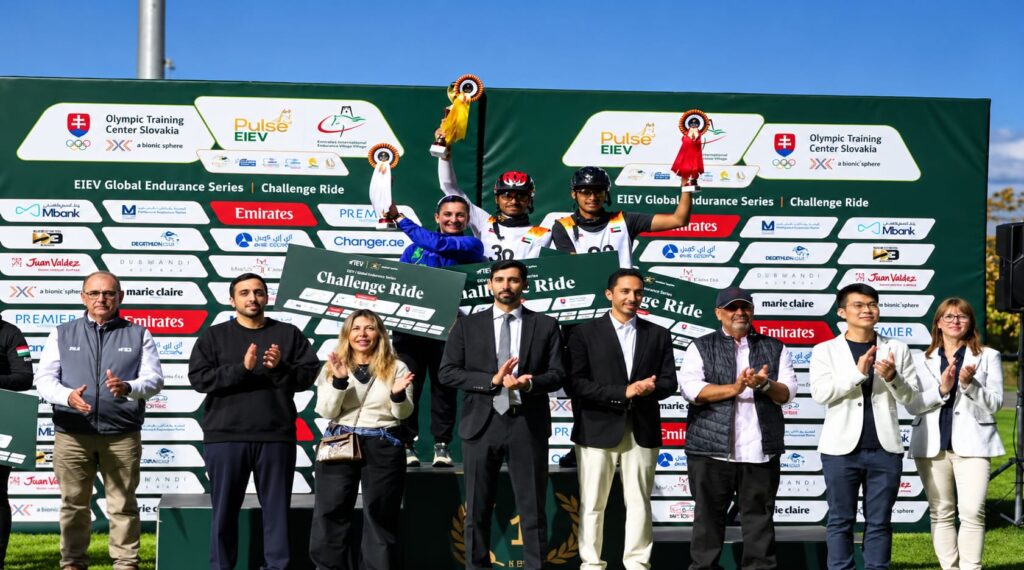
Eight international endurance races at the Šamorín leg
An international programme at several levels tested horses and riders over 100 to 160 kilometres, with distinct routes for seniors, young riders and teams.
The FEI recorded the Šamorín event from 24 to 27 September, while the listed endurance competitions started on the morning of 25 September and continued through 27 September.
How was the programme organised?
Friday opened with the 120-kilometre CEIYJ2* competition for juniors and young riders. Saturday was the busiest day, with 100, 120, 140 and 160-kilometre races, alongside a 100-kilometre CEIYJ1* youth race and the 120-kilometre CEIO2* team competition. Sunday closed the programme with a 100-kilometre CEI1* race.
160 kilometres: an elite test
The 160-kilometre CEI3* carried the programme’s highest classification and longest distance. According to the FEI schedule it started at 5:45 a.m. local time, with announced prize money of €6,500. At this level, speed alone is insufficient: effort management, recovery between stages and maintaining veterinary fitness are central to the competition.
From individuals to teams
The 120-kilometre CEIO2* added a team dimension, with individual and team results and announced prize money of €6,000. Team success depends on more than one horse and rider, making safe completion and balanced pacing among team members part of the strategy rather than simply chasing the fastest individual time.
Why do different distances matter?
Distances from 100 to 160 kilometres create a clear progression of experience. One-star competition tests the horse’s foundation, while two and three stars raise endurance and veterinary management demands. Junior and young-rider classes give emerging riders a structured international route rather than sending them directly to the highest levels.