
When an Arabian breeder looks at a show prospect, an expressive eye or refined head may attract attention before the rest of the horse is considered. That first impression is understandable, but it cannot support a purchase, showing or breeding decision on its own. A horse is a connected body. A head photograph cannot establish limb quality, movement or health, and a score sheet cannot replace observation in several settings. Begin by identifying the question: are you assessing appearance on a competition day, examining an individual concern, or gathering evidence for a breeding programme that will continue for years?
ECAHO’s educational material provides a vocabulary for type, head and neck, body and topline, limbs and movement. WAHO’s definition addresses purebred identity through accepted stud books and registers. These are different questions. People may disagree about the beauty of a registered Arabian without that disagreement cancelling its recorded identity. Equally, a show placing is not a comprehensive certificate of soundness, fertility or hereditary merit. Each decision needs the relevant evidence and the appropriate professional interpretation, alongside the rules that actually govern the particular event.
The following framework is an editorial aid for observation and comparison, not an official judging sheet or veterinary examination. It concerns Arabian show horses compared at reasonably similar ages, condition and preparation. Its purpose is to protect calm handling and comfort while keeping every conclusion proportionate to the information available. An attractive individual deserves careful attention, rather than confidence that runs ahead of the evidence.
1. Type and identity: define the question
Start by separating registered identity from the impression of type. WAHO connects purebred Arabian identity with entry in a stud book or register that it accepts. An attractive photograph does not establish that identity, and an appearance that disappoints an observer does not invalidate it.
Before a purchase, reconcile the name, registration number and identification with the documents and responsible registry. Open the aesthetic assessment as a separate file. This prevents the word “purebred” from becoming a casual synonym for attractive, and prevents an unfashionable appearance from being treated as evidence against documented ancestry.
For type, let the eye travel from the head through the neck, body and limbs before returning to the whole impression. Ask where the connections look coherent and where further observation is needed. Do not allow one characteristic to stand in for every category. A remarkable head can command attention while assessment of body or movement remains different.
A score sheet is useful partly because it preserves separate questions instead of turning one admired feature into the answer to all of them. The importance assigned within a particular competition comes from its published system, not from numerical weights invented by an observer.
Make the comparison fair before trying to make it precise. Record each horse’s age, sex, body condition and the date of the material. A growing youngster should not be judged against a mature stallion’s photograph as though every difference were permanent.
Request side, front and rear views on suitable ground with reasonably comparable light, and ask whether images have been edited. This is an editorial method for improving a comparison, not an additional entry requirement. It helps reveal what the camera angle or pose contributed to the impression and makes the limits of the available view visible.
Write a conclusion that can be revisited. “The proportions were observed in a relaxed stance and at walk on two dates” is more useful than “the best line in the world.” Add the limitations beside it: perhaps the rear view is missing or the material is old.
Not every observation needs a number, and insufficient information is a legitimate outcome. When the team returns after a season, a dated description can be updated. An absolute promotional statement offers no usable baseline and encourages a contest in enthusiasm instead of a discussion about the horse.
2. Head and neck: attraction is not diagnosis
Look at the head from more than one direction and then view it in connection with the neck and body. A close image can reveal an eye or muzzle detail while concealing relative size and the relationship to the rest of the horse. Combine detail and whole-horse views rather than substituting one for the other.
Lens, distance and camera angle affect the impression of proportion, so two unrelated photographs cannot provide a reliable measurement. The aim is to identify what was actually observed and distinguish a description of features from a confident prediction of a show result.
Do not use facial appearance to diagnose breathing or dental function. An observation may raise a reasonable question, but answering it requires the relevant history and veterinary examination. Conversely, a comfortable-looking horse in a short clip does not exclude a health problem.
Difficulty eating, an unusual respiratory noise or a change in performance belongs in the case history for individual assessment. This article does not invent numerical anatomical thresholds, and its photographs do not identify their subjects as either healthy or diseased. Aesthetic discussion must leave clinical conclusions to an appropriate examination.
Read the neck in ordinary walking as well as in the posed stance. Record its carriage during a change of direction and after the horse settles, instead of relying on elevation during excitement. This does not mean a viewer can isolate the function of individual muscles from video; the task is descriptive.
Ask for normal, safe presentation appropriate to age and experience. Repeated fear or resistance is not an invitation to apply more pressure for a better picture. The circumstances of handling need to be understood, with professional assessment of pain when it is suspected.
In a breeding file, admiration for the sire’s head should not become a promise about the foal. Compare documented relatives and known progeny, distinguishing direct observation from an owner’s account. Resemblance between two animals alone does not establish inheritance, and a feature missing from advertising is not necessarily absent from the family.
State a limited descriptive aim, such as retaining proportion while investigating a less coherent connection, and preserve the mare’s baseline material before the decision. Later assessment requires growth, health and management records, rather than a celebratory photograph used to confirm a hypothesis written after the result.
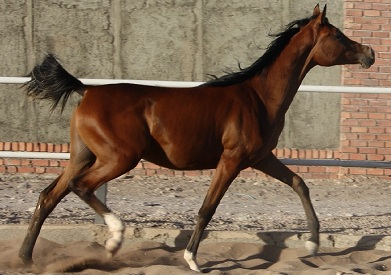
3. Body and topline: distinguish structure from preparation
Photograph the whole body on reasonably level ground and record the stance, including limb and head position. A pose can conceal a connection or exaggerate a feature. There is no need to force an uncomfortable position to make the horse assessable; several natural views are more valuable for a comparison file.
Describe the proportions and connections first, then revisit the impression in walking. A pleasing line in a photograph cannot establish back strength, spinal health or reproductive capacity. Those are distinct questions requiring evidence beyond the visual impression that interests the show observer.
Condition and preparation influence what the eye can see. Record the date and known context of growth, work, pregnancy or lactation without treating every difference as structural. For a comparison between seasons, make the observation conditions reasonably similar.
Neither deliberate thinness to sharpen lines nor excessive condition to conceal them is a sound assessment strategy; appropriate nutrition depends on the horse and its professional care plan. Deferring a comparison can be more honest than issuing a permanent judgement about an individual whose current circumstances differ substantially from those of the comparison animal.
Use a descriptive record rather than a competition in terminology. Under body, state what the side view reveals, what it does not reveal and which dated clip supports the observation. When two people disagree, ask each to identify the region and viewpoint behind the opinion.
The disagreement may arise from inadequate material or different assessment aims rather than lack of competence. Do not transfer a judgement from one show to another without checking the system. Competition assessment belongs to a particular class and context, whereas retaining a mare for breeding requires a longer view.
For mares, preserve reproductive history as carefully as show history: documented pregnancies, foalings, veterinary follow-up, recovery periods and changes in condition. Visible body capacity cannot replace that record, and appearance does not justify calling a mare an “easy breeder.” When comparing daughters, add each individual’s age and management before attributing differences to a sire.
This is a practical way to reduce bias, not a formula predicting fertility or foal quality. Breeding interpretation remains conditional on the number of animals observed and the quality and completeness of their records.
4. Limbs and feet: specific observations, clear limits
Begin with safe front, rear and side observation, then check the stance and ground before interpreting alignment. A foot placed forward, a turned head or uneven footing may explain a difference between views. Preserve several natural positions and record questions for the veterinarian or farrier.
No photographed angle in this framework equals a diagnosis, and an apparent deviation does not by itself establish its consequences for that animal. The breeder’s task is to assemble useful information that a professional can assess, rather than replacing examination with a confident label.
Link a foot photograph with its care history and recent events. When was the last farrier visit? Did ground or workload change? Is there a documented injury? Such questions prevent every change from being attributed to permanent structure or ancestry.
Do not request aggressive trimming to improve a show picture, and do not assume that an altered outline has addressed the cause of a problem. Veterinary and farriery plans should fit the individual. If pain or lameness is suspected, safety and clinical assessment take priority; continuing the presentation or filming movement may not be appropriate.
When reviewing a sire’s progeny, collecting pictures of the best offspring is not a complete record of limbs. Try to identify the group actually available for assessment, including animals never shown, along with dates, dams and management.
Repetition of an observation does not establish a hereditary cause; the animals may also share care, age or location. Record the association and the limits of the data, and seek appropriate expertise when health or breeding implications matter. A strong decision acknowledges uncertainty instead of attaching a genetic explanation to every resemblance.
A useful decision record has three columns: the descriptive observation, the professional question and the condition to be met before purchase or breeding. For example, note a difference between views, request an appropriate assessment and defer the decision until it is interpreted.
Do not turn this framework into public health scores about an individual without examination or access to the relevant history. Information supplied by an owner needs provenance and a date, with permission for sharing private material. Precision and fairness to both horse and owner belong in the same decision process.

5. Movement: observe a pattern, not a moment
Start with ordinary walking and suitable trotting when safe, using a professional handler for calm presentation. Preserve a straight-line view and a side view when circumstances allow, noting surface, approximate pace and context. Knee or tail elevation alone should not define quality.
Observe rhythm, tracking and transitions as far as the available view permits. This is descriptive material for a show file, not a clinical protocol. It cannot diagnose an unusual movement or locate pain. Those questions require an individual veterinary assessment, and any concern about safety changes what observation is appropriate.
Two clips require comparable conditions before they support a comparison. A horse on deep sand and another on firmer footing have not completed a standardised test, and an inexperienced youngster differs from an individual accustomed to the ring. Do not erase these differences because the visual outcome seems obvious.
Record them beside the date and request further material for a consequential decision. Slow playback may help review the sequence of movement, but it cannot create clinical precision absent from the original recording or replace a missing viewpoint.
Give calm behaviour a place in the file. Ring presence belongs to the show experience, but a breeder also needs to know how the individual moves and responds outside heightened moments. Observe the return from presentation to relaxation without deliberately frightening or exhausting the horse.
ECAHO’s welfare work and organisers’ rules place humane handling at the centre; a more dramatic movement cannot justify harmful methods. For a welfare concern at a competition, document facts safely and report through the event’s appropriate officials and procedures rather than making a public accusation from an isolated clip.
When reading scores, keep the movement assessment separate from conclusions about other body regions. A high mark does not “prove” loin strength, and a lower mark does not reveal a disease. The score sheet cannot support that leap. Compare several observations and ask what changed in conditions or presentation between classes.
In a breeding file, describe repeated patterns among offspring when enough animals are available, making missing records explicit. That is more informative than a montage collecting the most spectacular two seconds of each horse while concealing everything before and after them.
6. Breeding decisions: test a hypothesis, do not sell certainty
Write the programme’s objective before choosing a fashionable name. Identify the characteristics to retain and the questions about the mare that need answers, then assess shortlisted stallions with equivalent care. Do not attach invented figures to official scores that imply a calculated probability of breeding a champion.
This framework neither measures genes nor estimates that probability. It provides intelligible reasons for a choice and explicit limits to the information. Health or reproductive concerns belong in a discussion between owner and veterinarian before an aesthetic comparison becomes a breeding decision.
Preserve baseline photographs, dates and observations, then agree suitable growth-review points with the team. Record events that change interpretation, such as injury, relocation or altered care, without forcing every difference into a single explanation.
After each foal, return to the written objective and ask what can be observed and what remains premature. Do not rewrite the objective to fit the foal. Include animals that never enter shows in the same record. Their absence from the ring does not remove their relevance when the breeder evaluates the programme rather than its advertising highlights.
End every review with a specific, defensible action: continue observation, request a document or assessment, defer the choice or change the shortlist. Saying that a stallion “fixes the fault” is insufficient; define the observation and ask what evidence exists among his offspring under comparable conditions.
Preserve conflicting evidence instead of selecting the convenient part. Transparency protects the owner’s resources and reduces pressure on the horse. The checklist is not a guarantee of success. It reduces avoidable mistakes arising from wrong identity, incomplete images or a promotional story that has never been tested.
Keep welfare as a condition preceding aesthetic preference. Choose management and presentation that respect comfort and safe handling, and consult current rules rather than relying on an old summary. Every observation need not become an accusation, nor every uncertainty a permanent rejection.
Each team member should understand the limits of their role and the next justified step. Arabian type can then be appreciated in the whole horse, while function is investigated through the relevant evidence. A programme gains durable value through reliable records and fair comparisons, rather than through the scale of the promise attached to a beautiful image.
Aletaq Golden AdvicePlace a verifiable question beside each admired feature: what was observed, in which conditions, and what evidence is missing? An aesthetic category cannot settle a health question, and visual resemblance does not establish inheritance. A good decision may be to defer judgement until identity, individual condition and the relevant records are clear.
Closing perspective
A whole-horse assessment begins with accepting that each kind of information has a purpose and a limit. Registration establishes identity within its rules; aesthetic assessment describes a presentation within a judging system; veterinary examination addresses individual health; and breeding records support comparisons that develop over time. Bringing these together in one file is useful. Collapsing them into a single absolute judgement discards precisely the distinctions needed for a responsible decision.
Review one horse’s file this week. Does it include dated whole-horse images, calm movement observations and clear provenance for the information on which the decision depends? Which question remains unanswered, and what practical step could close that gap? Discuss the question that most affects the showing or breeding decision with the team, rather than adding another promotional adjective. Subscribe to Aletaq’s newsletter for further guides that help readers interpret horses, rules and records with greater precision and fairness, while preserving room for a professional answer when observation alone cannot settle the issue.
Balance does not remove taste or competitive ambition; it gives each its appropriate place. When the owner knows which findings are established and which remain tentative, the choice of event, presentation timing or breeding direction becomes clearer. Such knowledge accumulates through calm review and respects the individual whose beauty, identity and comfort the programme seeks to preserve.
Subscribe to Aletaq’s newsletter for new reference guides.Sources and references
- ECAHO — Judges Training Manual
- ECAHO — 2024 Judges Manual, eighth edition
- ECAHO — Blue Book and show rules
- ECAHO — Official documents and score sheets
- ECAHO — Good horsemanship
- WAHO — Arabian Horse Definition
- WAHO — World Arabian Horse Organization
- Arabian Horse Association — Horse welfare policy
- Pexels — Original article image licence reference