
A final total does not explain by itself why an Arabian horse moved ahead in a show. Two horses can reach the same number through different strengths. The order can also change between qualification and the championship because the selection method changes. Useful interpretation starts with the event documents: the declared scoring system, age category, judging panel, tie rules and qualification method. Watching the horse and reading the individual marks becomes more informative once that framework is clear.
This guide offers a practical way to turn a score sheet into observations that can be reviewed. Regulatory facts come from ECAHO documents; the viewing questions and comparison examples are editorial tools for owners, breeders and spectators. An arithmetic illustration is hypothetical, rather than a result attributed to a real horse. Visual observation neither diagnoses disease nor establishes that a trait will be inherited. Those limits matter particularly when an assessment of one appearance becomes a decision about breeding.
Beauty also needs to be distinguished from manufactured excitement. A brief pose cannot reveal everything visible at walk and trot, and a selected photograph may conceal part of the horse's balance. Read type, head and neck, body, legs and movement together. Keep a description alongside the number, identify what was genuinely visible, and list what needs a clearer recording, veterinary examination or progeny evidence. The aim is a calmer, better supported decision that protects welfare and treats a different placing as a reason to investigate rather than a verdict on the horse's entire worth.
Read the scoring document before comparing
Begin with the exact schedule, not an assumed universal formula. The event must declare how marks are calculated and how ties and championships are decided. A score reported out of one hundred cannot be compared casually with a differently calculated total. Save the document version beside the result so the calculation can be reconstructed later.
The ECAHO Blue Book is a binding framework updated periodically. The official download page reviewed for this article displayed documents labelled 2025; that label must not be silently changed to 2026. For a particular competition, check its approved schedule and the rules applicable on its date. A familiar rule remembered from another season is not sufficient evidence.
Do not automatically remove the highest and lowest marks. ECAHO's published scoring addendum permits that method under specific conditions, including at least seven judges in the ring and a clearly described approved schedule. If the conditions are absent, inventing a trimmed average creates an unofficial result. Keep the organizer's published calculation separate from any personal statistical exploration.
Write each judge's marks in their original columns before calculating anything. In a hypothetical movement comparison, marks of nineteen, nineteen and nineteen have the same average as twenty, nineteen and eighteen, but different spread. The example shows agreement, not which horse is objectively superior. Spread becomes informative only alongside the panel, category, presentation and scoring method.
Separate a class score from a championship vote. The published championship rules allow distinct methods, with qualification and tie provisions that must be checked. A horse can therefore lead a numerical class comparison without automatically winning every later medal decision. Reporting the method explains that outcome more honestly than calling the change inexplicable or assuming that the highest earlier total always controls.
Read Arabian type as a whole
Type describes the coherent identity of the Arabian horse rather than a competition to find the most dramatic face. Expression, proportions, refinement and the way the horse carries itself should be read as a whole. A striking head cannot remove the need to consider the rest of the body. Describe the feature actually observed before reaching for a broad adjective such as exceptional.
Watch whether the impression remains when the horse becomes quieter. A lifted tail, elevated head or moment of intense attention may dominate one photograph without representing the whole presentation. Compare the walk, trot and stand from the same appearance. If the recording is incomplete, say so in your own notes rather than filling the missing view with a favourable assumption.
Young horses do not develop every region at the same speed. Long limbs or an unfinished body need interpretation within the appropriate age category. That observation does not justify promising that a particular weakness will disappear. Keep dated images through development and distinguish a possible change with maturity from a structural feature repeatedly visible in the same individual.
Sex and maturity can affect expression, but neither makes sound construction optional. Masculine presence is not a reason to overlook a weak connection through the body; a refined mare should not be judged as valuable merely because she appears delicate. Use precise descriptions that preserve the shared requirements of balance and comfortable movement without imposing an invented numerical ideal.
For breeding, ask whether the desirable impression recurs among relatives and offspring evaluated in comparable circumstances. A single high type mark does not measure genetic transmission. Record how many descendants were available to review and what was actually visible in them. A useful breeding hypothesis can be revised when later progeny evidence contradicts the initial attraction of one celebrated individual.
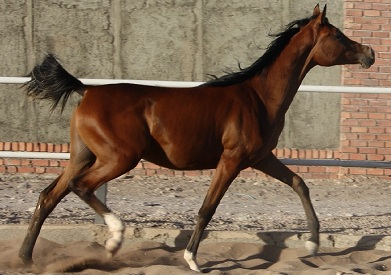
Head and neck: proportion and connection
Read the head in relation to the horse, not as an isolated portrait. Proportion, expression and connection to the neck matter more to an analytical record than a fashionable label. Avoid diagnosing breathing or dental disease from a photograph. If function is a concern, the appropriate next step is individual veterinary assessment rather than a medical accusation disguised as a show critique.
The neck's visual effect depends on its connection to the head and trunk as well as its apparent length. A still image can make that connection look different when the head is raised or the stance is stretched. Compare natural moments before and after the formal pose. Write down which view supports the observation and which part remains hidden.
Follow the transition out of the stand into walk and trot. Does the horse keep an organized outline without appearing constrained by the lead? This is an observation question, not a substitute for a trained judge or a soundness examination. A complete recording gives more context than a cropped headshot and makes it easier to separate presentation choices from the visible structure.
Check whether the event scores head and neck together or records them separately before combining them. Do not manufacture a separate ranking from columns that the organizer does not publish. Even where two components exist, a reader cannot infer the precise reason behind an individual judge's mark unless the judge has actually provided that explanation through an authorized channel.
A breeding objective should name the intended improvement. Better head is too vague to guide a serious comparison; proportion, expression or a clearer connection are more useful descriptions. Then inspect the rest of the prospective parent's record. Selecting one attractive region while ignoring recurring weaknesses elsewhere can turn a narrowly successful photograph into a poorly supported production decision.
Body and topline: a reviewable description
The body and topline connect the horse's visual impression with the support needed for movement. Shoulder, back, loin, depth and hindquarter should be considered together rather than reduced to the outline of a single pose. Keep your description within what the available views show. Apparent shape in an image is not a measurement and should not be presented as one.
Presentation changes the impression of proportions. A stretched stance can alter the apparent length of the back and angle of the hindquarter, while camera position can exaggerate the nearest region. Compare side, front and rear views when available. If only one angle exists, retain that limitation in the private evaluation instead of claiming a complete conformation assessment.
Body condition also influences the visible outline. More coverage is not proof of stronger construction, and a leaner appearance is not proof of superior athletic capacity. Decisions about weight, feeding or health require an appropriate assessment outside the show photograph. A breeder can note that condition complicates interpretation without assigning a disease, a treatment or an imagined ideal weight.
A high mark elsewhere can compensate numerically for a lower body mark in some totals, but arithmetic does not remove the underlying observation. For production planning, keep each region visible in the written record. Consider whether a prospective pairing might repeat a weakness, while acknowledging that visual complementarity does not guarantee a particular foal or establish a genetic probability.
Finish the body assessment with a reviewable statement. A phrase such as a balanced shoulder with a loin requiring closer observation is more useful than a bare number because a later video can test it. Add the date, the view and the confidence of the observation. This creates a record that can improve with evidence instead of hardening immediately into an unchangeable label.

Legs and movement: function and welfare
Leg assessment deserves attention even when other features attract more applause. Standing views and movement provide different information about alignment and use of the limbs. Observe both rather than deciding from a dramatic trot alone. A score sheet can identify a region needing closer attention, but it cannot replace a clinical examination or tell a breeder the cause of an apparent irregularity.
At walk and trot, follow the horse's rhythm, balance and path of travel. Animation alone is not the same as an economical or organized movement. A brief burst of speed may obscure an uneven sequence, while an awkward turn can distort an otherwise useful view. Record the whole presentation whenever an authorized full video is available rather than extracting only the most exciting seconds.
Surface, camera angle and the handler's position affect what a viewer can see. Compare horses within the same category and session before comparing recordings made in different arenas. This does not create an adjustment formula for the official marks. It simply prevents a spectator from attributing every visible difference to the horse when the viewing conditions also changed.
If pain, marked unevenness or distress is suspected, welfare takes priority over collecting a better image. The veterinarian and designated officials have responsibilities that an online commentator does not. Do not recommend forcing another run merely to confirm a theory. A serious evaluation can state that assessment was limited and should be continued safely under qualified supervision.
For breeding records, separate a repeatable movement characteristic from a single show-day incident. Examine later appearances, relatives and offspring where those records exist, but do not convert resemblance into proof of inheritance. A responsible report distinguishes observation, hypothesis and clinical evidence. That distinction protects the horse and makes the breeder's eventual decision more informative than a collection of enthusiastic adjectives.
From judging differences to a breeding decision
The last step is to read disagreement without turning it automatically into controversy. Judges observe a living horse during a limited presentation and may differ within the authorized scale. First verify transcription, calculation and the applicable system. Only after the published record is clear does it become useful to discuss the pattern of marks or the effect of a tie rule.
Use an anonymous comparison sheet when possible. Remove the horse's reputation, owner and advertising language from the first reading and concentrate on category marks and available footage. Restore the identity afterwards for record keeping and breeding context. This is an editorial discipline for reducing your own bias, not a claim that official judges have ignored their conflict-of-interest obligations.
For each category, record the central pattern and the spread, using the same simple method for every horse in that comparison. Do not choose a statistic because it makes a preferred horse look better. An average and a range can organize observations, but neither becomes an official revised result. Label any independently calculated figure as analysis and retain the original published table.
ECAHO's class tie rules and championship tie rules do not describe exactly the same decision. The relevant document explains how type, movement, qualifying scores or other specified procedures enter the process. Read the correct provision for the precise stage. Do not apply a remembered class tie sequence to a medal selection simply because both situations involve equal numbers.
A hypothetical example helps. Imagine two qualifiers with equal published totals but different category profiles. The authorized tie procedure resolves their class order; it does not erase either horse's strengths. If both then reach a championship using a voting method, read those votes on their own terms. No real participant, disputed result or allegation is implied by this illustration.
Compare more than one appearance before making a lasting judgement about an individual. A record from several dates may show a recurring strength or an observation that changes as the horse matures. Keep the number of appearances visible. Three related videos from one show are not three independent competitions, and repeated clips of the same presentation add no new evidence.
Preserve the full reference for each record: event, date, class, horse identity, scoring method and official result link. If a name is shared by more than one horse, verify parentage and registration details before joining records. A mistaken identity can create an impressive but false career history and undermine every conclusion subsequently drawn about a family or breeding programme.
Use the same caution when evaluating a sire. Compare offspring of appropriate age and sex, and describe the selection of offspring you could actually review. Public winners are a selected sample, not the whole crop. Without a complete denominator, a collection of medals cannot be converted into a success rate or used to rank sires as though every breeder had the same opportunity.
For a mare, place show evidence beside her individual health, reproductive record and documented offspring. These are different kinds of information and should not be collapsed into one score. A mare with a less spectacular ring total may merit serious production consideration, but that conclusion requires her own evidence rather than a romantic generalization about overlooked families.
Keep a decision line at the bottom of the working sheet. State whether more observation, maturity, a professional assessment or a different production objective is needed. Give the reason and the next evidence you intend to seek. A decision can remain provisional without becoming vague; its value lies in showing what would justify a change of mind.
Welfare and fair presentation also belong in the review. ECAHO's conduct and horsemanship material addresses inappropriate alteration and handling. Do not treat artificial excitement or prohibited practices as a desirable breeding trait. A calm, transparent description of what was seen is more useful than rewarding an appearance whose conditions cannot be understood from the available evidence.
If the evaluation is public, keep the language precise and respectful. A lower published mark for legs is a fact about that sheet; a diagnosis about the photographed horse is a different claim requiring qualified evidence. Explain the distinction to readers. Criticism should help them understand the information rather than humiliate a horse, an owner, a handler or a judge.
Keep the sources and the original result accessible in the internal research record. If a later correction changes a mark or identity, update the analysis and explain the substantive change in the working file. Do not quietly preserve an earlier conclusion that depended on a superseded number. A useful reference remains accountable to new evidence throughout the horse's career.
Finally, ask what the result does not establish. It does not by itself prove soundness, fertility, inherited superiority, future medals or a foal's commercial value. Those questions need different records and sometimes professional examination. Treating the score as one structured observation preserves its genuine usefulness while preventing a successful appearance from being inflated into a promise it was never designed to make.
Aletaq Golden AdviceKeep the official sheet, approved schedule and full presentation together. Write a specific observation beside each category. Do not make a breeding decision from one total or let animation and a headshot replace assessment of body, legs and movement.
Closing perspective
Show marks are useful when they remain attached to the horse and the system that produced them. Begin with the approved schedule and official sheet, watch the full presentation, and describe each region instead of relying on the total. A small difference between judges is not automatically an accusation, and a win is not a promise of health, fertility or exceptional offspring.
A breeding operation can start simply: one file per horse, correct identity, dated results, reviewable observations and clear questions for follow-up. Add documented progeny and professional assessment where needed, and the decision becomes broader than an attractive image or a burst of applause. When evidence differs, preserve the difference instead of hiding it beneath a reassuring average.
After the next show, could you explain your interest in a horse without starting with its name or medal? Which category needs closer observation? Subscribe to Aletaq's newsletter for reference articles that help develop that analytical eye while keeping welfare and respectful interpretation at the centre of the discussion.
Subscribe to Aletaq’s newsletter for new reference guides.Sources and references
- ECAHO — Blue Book and Show Rules
- ECAHO — Rules for Conduct of Shows, 2025 published edition
- ECAHO — Rules for Ties and Championships, 2025 published edition
- ECAHO — Addendum VI: scoring
- ECAHO — Judges Training Manual
- ECAHO — Good Horsemanship
- ECAHO — Official results and score sheets
- ECAHO — Documents and judging forms